
Dwarf Neon Rainbowfish Care Guide: Electric Blue Flash
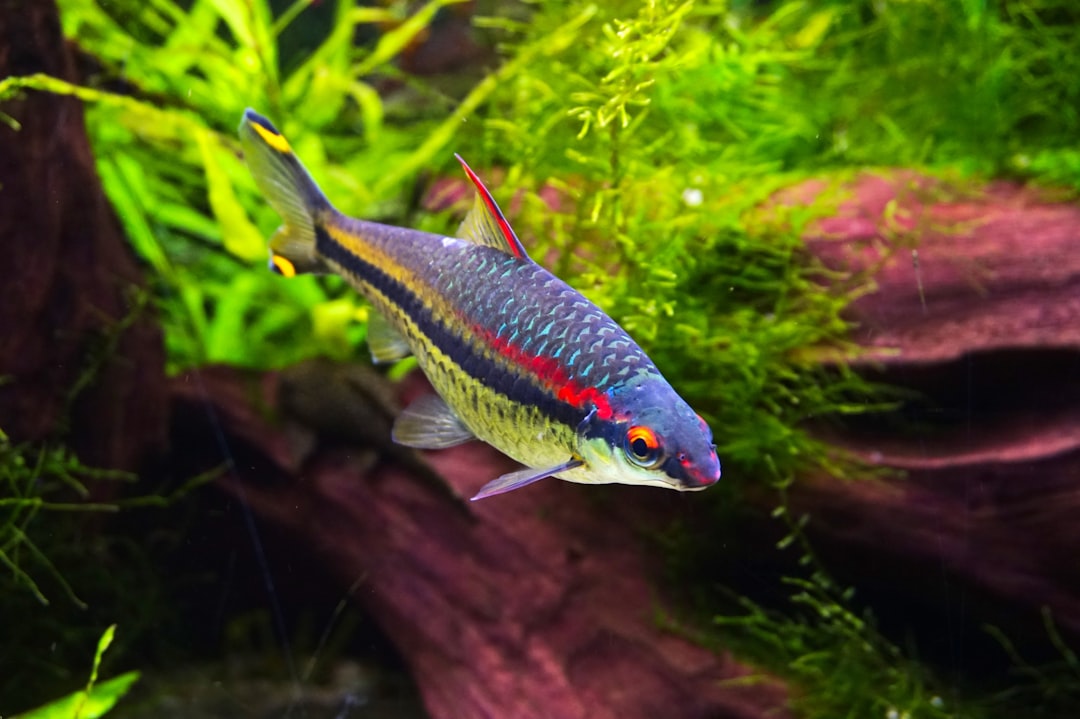
Table of Contents
- Introduction
- Species Overview and Origin
- Tank Setup and Water Parameters
- Feeding and Diet
- Behaviour and Temperament
- Compatible Tank Mates
- Breeding Praecox Rainbowfish
- Frequently Asked Questions
- Conclusion
Introduction
Imagine a school of small fish that shimmer electric blue under your aquarium lights, their fins edged in vivid orange or red. That is the dwarf neon rainbowfish in a nutshell, and this praecox rainbowfish care guide will show you exactly how to keep them thriving in a Singapore aquarium. Melanotaenia praecox is one of the smallest rainbowfish species, making it perfect for moderately sized tanks — even in space-conscious HDB setups.
At Gensou, based at 5 Everton Park, we have been advising Singaporean aquascapers for over 20 years. The praecox rainbowfish is one of our go-to recommendations for hobbyists who want colour, activity and personality without needing a massive tank.
Species Overview and Origin
The praecox rainbowfish is native to the Mamberamo River system in West Papua (Irian Jaya), Indonesia — making it one of the closest rainbowfish species geographically to Singapore. In the wild, it inhabits clear, fast-flowing tributary streams and small rivers with abundant vegetation.
Males display a brilliant neon blue body with bright orange-red edges on the dorsal and anal fins. Females are less intensely coloured, with a more silvery-blue body and yellowish fin edges. Both sexes have the characteristic deep-bodied, laterally compressed rainbowfish shape, but in miniature.
Key Taxonomic Facts
- Scientific name: Melanotaenia praecox (Weber & de Beaufort, 1922)
- Family: Melanotaeniidae
- Common names: Dwarf neon rainbowfish, praecox rainbowfish, neon rainbowfish
- Maximum size: 5–6 cm
- Lifespan: 3–5 years
- Origin: Mamberamo River basin, West Papua, Indonesia
Tank Setup and Water Parameters
Despite their small size, praecox rainbowfish are active swimmers that benefit from a spacious tank with plenty of open water. They also prefer clean, well-oxygenated water with some current — a setup that is easily achievable in Singapore.
Recommended Water Parameters
| Parameter | Ideal Range | Notes |
|---|---|---|
| Temperature | 24–28 °C | Perfect for Singapore’s tropical climate; no heater needed in most setups |
| pH | 6.5–7.5 | PUB tap water sits comfortably within this range |
| GH | 5–15 dGH | Moderately soft to moderately hard; local water is generally suitable |
| KH | 4–8 dKH | Stable KH supports consistent pH |
| Ammonia / Nitrite | 0 ppm | Sensitive to ammonia; ensure the tank is fully cycled |
| Nitrate | < 20 ppm | Keep low with weekly 25–30 % water changes |
Tank Size and Layout
A school of six to eight praecox rainbowfish needs a minimum of 80 litres (approximately a 60 cm tank). For a larger group of 10–12 with tank mates, aim for 120–150 litres. The tank should prioritise horizontal swimming space — long and wide is better than tall and narrow.
Aquascaping Recommendations
- Substrate: Fine sand or aquasoil. A dark substrate intensifies the neon blue body colour.
- Plants: Dense planting along the sides and back, with an open swimming corridor through the centre. Excellent choices include Vallisneria, Rotala, Hygrophila and Cryptocoryne. Floating plants like Salvinia or red root floaters help diffuse bright lighting.
- Hardscape: Driftwood branches and smooth river stones create a natural look. Position hardscape to define planted zones without blocking the central swimming area.
- Filtration: A canister filter or strong hang-on-back providing moderate to strong flow. Praecox rainbowfish enjoy current and the extra oxygenation it provides.
- Lighting: Moderate to bright. Under good lighting, the iridescent blue scales flash spectacularly. A timer maintaining 8–10 hours of light per day suits both fish and plants.
- Lid: Essential. Rainbowfish are known jumpers, especially when startled or during morning displays. A tight-fitting cover glass or hood prevents losses.
Singapore Tap Water Compatibility
PUB-treated water in Singapore typically falls within the praecox’s preferred pH and hardness ranges, making it one of the most hassle-free species for local hobbyists. Simply dechlorinate with a quality water conditioner and perform regular water changes. No RO mixing or pH buffering is necessary for most setups.
Feeding and Diet
Praecox rainbowfish are omnivores with a slight preference for protein-rich foods. In the wild, they feed on small insects, insect larvae, algae and plant matter.
Recommended Foods
- Staple: High-quality micro pellets or small tropical flakes. Rainbowfish-specific formulas often contain colour-enhancing ingredients that bring out the blue and orange tones.
- Live foods: Daphnia, baby brine shrimp, micro worms and fruit flies. Live foods trigger the most enthusiastic feeding response and promote vibrant colouration.
- Frozen foods: Frozen bloodworms (chopped if large), brine shrimp, cyclops and daphnia. Widely available at aquarium shops across Singapore.
- Vegetable component: Spirulina flakes or wafers once or twice a week. A balanced diet with both animal and plant matter supports long-term health.
Feeding Tips
- Feed two to three small meals daily rather than one large meal. Rainbowfish have small stomachs and do better with frequent, modest portions.
- Scatter food across the water surface so all fish in the school get their share — dominant males may otherwise monopolise a single feeding point.
- Remove uneaten food within two minutes. Singapore’s warm water accelerates decomposition and can cause rapid water quality deterioration.
Behaviour and Temperament
Praecox rainbowfish are peaceful, active and highly social. They are a joy to observe, particularly first thing in the morning when males put on their best displays.
Behavioural Highlights
- Morning displays: Males intensify their colours at dawn (or when lights first turn on) and display to one another and to females by flaring fins and swimming parallel. This “dawn dance” is one of the most captivating behaviours in the freshwater hobby.
- Schooling: They are happiest in groups of at least six, with a mix of males and females. Larger groups amplify the display behaviour and spread any minor chasing across more individuals.
- Swimming pattern: They occupy the mid to upper water column and move in a flowing, undulating pattern — quite different from the darting movement of tetras.
- Jumping: They are active jumpers, especially when excited or spooked. Never leave the tank uncovered.
- Temperament: Very peaceful. They rarely nip fins or harass tank mates. Their fast swimming speed, however, may unsettle very timid species.
Sexual Dimorphism
| Trait | Male | Female |
|---|---|---|
| Body colour | Intense neon blue | Silvery-blue, less vivid |
| Fin edges | Bright orange to red | Yellowish to pale orange |
| Body depth | Deeper, more arched back | Slimmer, more streamlined |
| Dorsal fin | Taller, more pointed | Shorter, rounder |
| Behaviour | Active displays and sparring | Calmer, less conspicuous |
Compatible Tank Mates
The praecox rainbowfish’s peaceful nature and moderate size make it an ideal community fish. Choose tank mates that can handle a bit of current and activity.
Good Tank Mates
- Other small rainbowfish (threadfin rainbowfish, Pseudomugil species)
- Medium tetras (rummy-nose tetras, black neon tetras, x-ray tetras)
- Barbs (cherry barbs, Odessa barbs)
- Corydoras catfish (all species)
- Otocinclus catfish
- Bristlenose plecos
- Kuhli loaches
- Peaceful gouramis (honey gourami, pearl gourami)
- Amano shrimp (large enough not to be eaten)
Tank Mates to Avoid
- Large, aggressive cichlids
- Predatory fish
- Very slow, long-finned species that may be stressed by the rainbowfish’s speed
- Tiny species like micro rasboras in very small tanks (risk of being outcompeted for food)
Breeding Praecox Rainbowfish
Praecox rainbowfish are among the easiest rainbowfish to breed and one of the most prolific. In a well-maintained tank, they may spawn daily — the challenge is not triggering spawning but raising the fry successfully.
Breeding Setup
- Conditioning: Feed the breeding group generously with live and frozen foods for 1–2 weeks. Both sexes should be in peak condition — males vibrantly coloured, females plump.
- Spawning medium: Place spawning mops (made from acrylic yarn) or fine-leaved plants such as Java moss in the tank. Rainbowfish deposit adhesive eggs on fine-textured surfaces.
- Spawning behaviour: Males display intensely in the early morning. A receptive female follows the male to the spawning site where eggs are deposited and fertilised among the mop strands or plant fronds. A female may deposit 10–30 eggs per day over several consecutive days.
- Egg collection: Remove the spawning mop every few days and transfer it to a separate hatching tank. This prevents adults from eating the eggs and accumulates a good batch of fry.
- Hatching: Eggs hatch in 7–10 days at 26 °C — longer than most community fish. Fry are tiny but fully formed.
- Fry feeding: Start with infusoria, paramecium or commercial liquid fry food. After 5–7 days, graduate to freshly hatched baby brine shrimp. Growth is steady but slower than tetra or barb fry.
Tips for Raising Fry in Singapore
- Singapore’s warm temperatures (27–30 °C) slightly accelerate hatching times. Monitor eggs closely from day five onwards.
- Keep the hatching tank covered to prevent evaporation and maintain stable conditions.
- A sponge filter is essential to provide gentle filtration without endangering the tiny fry.
- Perform small, daily water changes (5–10 %) with aged, dechlorinated water to maintain pristine conditions.
Frequently Asked Questions
Do praecox rainbowfish need a heater in Singapore?
In most cases, no. Singapore’s ambient temperature of 27–31 °C falls squarely within their preferred range of 24–28 °C. However, if your tank is in a heavily air-conditioned room that regularly drops below 24 °C at night, a small heater set to 25–26 °C provides a useful safety net.
Why are my praecox rainbowfish not showing bright colours?
Dull colouration is usually caused by one or more of the following: a diet lacking in live or frozen foods, a group that is too small (fewer than six), stress from aggressive tank mates, poor water quality, or excessively bright lighting without shaded areas. Address these factors and you should see a dramatic improvement within a couple of weeks.
Can praecox rainbowfish live with shrimp?
Adult Amano shrimp are generally safe. Smaller Neocaridina shrimp may be at risk, especially juveniles. If you want to keep a cherry shrimp colony with praecox rainbowfish, provide abundant moss and hiding spots, but expect some predation on shrimplets.
How do I tell male praecox rainbowfish from females?
Males are more intensely blue with vivid orange-red fin edges and a deeper body profile. Females are slimmer, more silvery and have yellowish or pale orange fin edges. The difference becomes increasingly obvious as the fish mature past three to four months of age.
Related Reading
- Blue-Eye Gertrudae Rainbowfish Care Guide: Spotted Blue-Eye Nano Fish
- Blue-Eye Rainbowfish Guide: Pseudomugil Species for Nano Tanks
- Forktail Blue Eye Rainbowfish Care Guide: Pseudomugil Furcatus
- Forktail Blue-Eye Rainbowfish Care Guide: Pseudomugil Furcatus
- Forktail Blue-Eye Rainbowfish Guide: Tiny Fins, Big Colour
Conclusion
The dwarf neon rainbowfish is one of the most rewarding small species you can keep. Its electric blue shimmer, engaging social behaviour and ease of breeding make it a standout choice for planted community tanks. For Singapore hobbyists, the added bonus of compatibility with local water conditions and ambient temperatures means minimal fuss and maximum enjoyment.
Ready to add a school of praecox rainbowfish to your aquascape? Gensou has been Singapore’s aquascaping authority for more than 20 years. Visit us at 5 Everton Park to see these stunning fish in person, browse our online shop for fish, plants and equipment, or contact us for stocking advice tailored to your setup. Dreaming of a completely new aquarium? Our custom aquarium service will bring your vision to life — from design to installation.



