Tiger Nerite Snail Care Guide: Striped Powerhouse Algae Eater
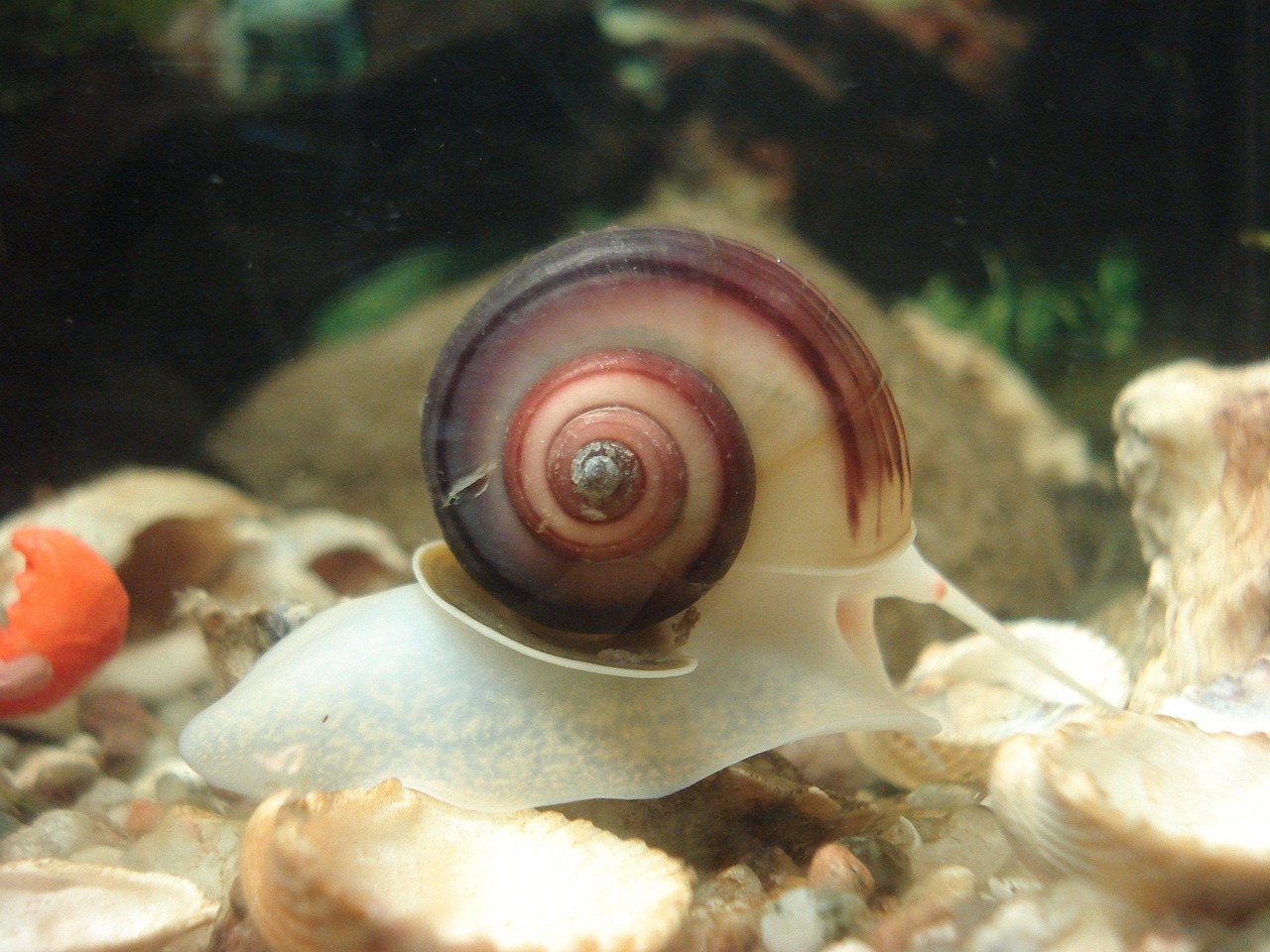
When algae coats your glass and hardscape, few creatures tackle it as efficiently as a hungry nerite snail. The tiger nerite — Neritina natalensis — earns its name from bold dark stripes on an amber-gold shell, and it earns its place in any aquarium through relentless grazing. This tiger nerite snail care guide from Gensou Aquascaping in Singapore covers water needs, feeding, and the one frustrating habit that every nerite owner learns to accept. They are among the most effective natural algae controllers available in the hobby.
Species Profile
Tiger nerites originate from coastal rivers and estuaries in eastern and southern Africa. Adults reach 2–3 cm in shell diameter. Their shells display a wide range of stripe patterns — from thick, evenly spaced bands to fine, irregular zigzags — making each individual visually distinct. Unlike pest snails, nerites do not reproduce in freshwater, so you will never face a population explosion. This single trait alone makes them the preferred algae-eating snail for planted aquariums.
Tank Requirements
Tiger nerites thrive in any established aquarium from 20 litres upward. One snail per 15–20 litres is a reasonable stocking guideline; overstocking leads to food competition and starvation. They need surfaces to graze — glass, rocks, driftwood, and broad-leafed plants all serve as feeding grounds. Avoid tanks with exclusively fine-leaved plants and minimal hardscape, as there simply is not enough grazing area. A tight-fitting lid or mesh cover prevents escapes; nerites are notorious climbers and will leave the water if conditions deteriorate.
Water Parameters
Nerites prefer mildly alkaline, moderately hard water: pH 7.0–8.2, GH 6–15, and temperature 22–28 °C. Singapore’s tap water is soft at GH 2–4, which can cause shell erosion over time. Adding a small amount of crushed coral to the filter or supplementing with a GH booster prevents the telltale pitting and thinning that soft water causes on nerite shells. Temperature in our climate falls naturally within range. Avoid copper-based medications at all costs — even trace amounts are lethal to invertebrates.
Diet and Algae Control
Tiger nerites consume green spot algae, green dust algae, diatoms, and soft biofilm with impressive efficiency. A single snail can visibly clear a tank’s glass within days. Hard green spot algae on slow-growing leaves is not beyond them, though it takes longer to rasp away. When algae runs low in a well-maintained tank, supplement with blanched vegetables or algae wafers. Without supplemental feeding, snails in pristine tanks can slowly starve — a common oversight. Spirulina wafers dropped near their resting spot every few days fill the gap.
The Egg Problem
Every nerite owner encounters it: small, hard, white sesame-seed-like eggs deposited on driftwood, rocks, glass, and filter outlets. These eggs will not hatch in freshwater — nerite larvae require brackish water to survive — but the eggs themselves are unsightly and difficult to remove. A razor blade scrapes them off glass effectively. On porous surfaces like lava rock, they are nearly impossible to clean. Acceptance is often the most practical approach; the algae control benefits outweigh the cosmetic annoyance for most hobbyists.
Behaviour and Lifespan
Nerites are slow, methodical grazers that work around the clock. They have no set activity pattern, moving continuously across surfaces in a seemingly random but thoroughly systematic path. When a nerite stops moving for extended periods or flips upside-down and cannot right itself, water quality issues are usually the cause — check ammonia and nitrite immediately. Healthy tiger nerites live 3–5 years. They are entirely peaceful and ignore all tankmates, making them universally compatible with fish and shrimp.
Compatibility
Tiger nerites coexist safely with virtually any community fish, shrimp, and other snails. The only threats come from dedicated snail-eaters: pufferfish, assassin snails, and certain loach species like Botia will prey on them. In planted tanks, they do not damage healthy plants — their radula is suited to scraping biofilm and algae, not biting through plant tissue. Pairing nerites with a shrimp colony creates a comprehensive cleanup crew that handles algae, detritus, and biofilm across all tank surfaces.
Sourcing and Pricing in Singapore
Tiger nerites are widely available at local fish shops across Singapore, typically priced at $1.50–$4 each. Shops along Serangoon North and at C328 Clementi usually carry them. When selecting, look for active snails with intact, non-pitted shells — shell damage indicates either poor water conditions or old age. Acclimatise slowly by floating the bag for 15 minutes, then drip-acclimatising over 30–45 minutes. This tiger nerite snail care guide should help you harness one of the simplest and most effective natural algae solutions available.
Related Reading
- Horned Nerite Snail Care Guide: Spiky Shells and Clean Glass
- Why Nerite Snails Won’t Breed in Freshwater: The Full Explanation
- Nerite Snail Species Comparison: Zebra, Tiger, Horned and Olive
- Nerite Snail vs Mystery Snail: Algae Eating, Size and Breeding
- Olive Nerite Snail Care Guide: Classic Dark Shell Workhorse

emilynakatani
Still Have Questions About Your Tank?
Drop by Gensou Aquascaping — most walk-in questions get answered in under 10 minutes by someone who has set up hundreds of tanks.
5 Everton Park #01-34B, Singapore 080005 · Open daily 11am – 8pm