
How to Breed Cherry Barbs: From Courtship to Free-Swimming Fry
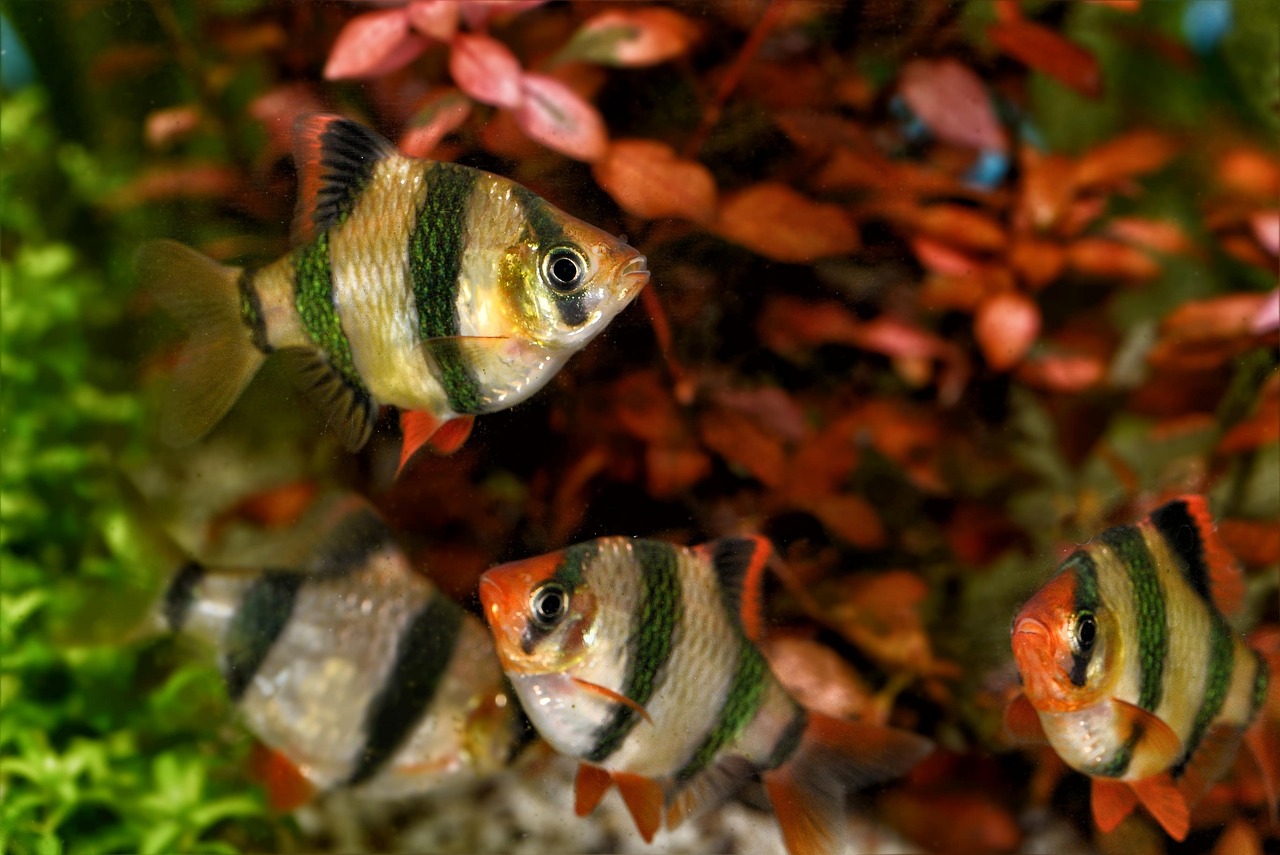
The cherry barb (Puntius titteya) is one of the easiest egg-laying fish to breed in a home aquarium, making it a perfect first project for hobbyists looking to move beyond livebearers. Males in breeding dress turn an intense crimson that rivals any marine fish for sheer visual impact. This breed cherry barb guide from Gensou Aquascaping at 5 Everton Park, Singapore, walks you through the entire process — from selecting breeders to raising robust fry ready for your community tank or the local market.
Selecting Breeding Stock
Mature cherry barbs are simple to sex. Males develop the signature deep red colouration, especially along the flanks, while females remain a warm brown-gold with a prominent dark lateral stripe. Choose males that show the most intense colour and active behaviour — pale, shy males rarely make strong breeders. Females should appear plump when viewed from above, indicating a belly full of eggs. Select fish that are at least 3 cm long and six months old for optimal fertility.
Conditioning Period
Separate males and females into different tanks or use a divider for 7-14 days. During conditioning, feed generously with high-quality live and frozen foods: daphnia, bloodworms, and baby brine shrimp are all excellent choices. Cherry barbs are omnivores and less susceptible to bloat than cyprinids with specialised diets, so you can afford to be generous. Three small feeds per day brings both sexes into peak condition. Males intensify in colour almost daily during conditioning — a good sign that spawning is imminent.
Breeding Tank Preparation
A 30-40 litre tank is sufficient. Fill it with aged water at pH 6.5-7.0, GH 4-8, and temperature 26-27 °C — parameters easily achieved from Singapore tap water with basic dechlorination. Plant the tank densely with fine-leaved species: Java moss, Ceratophyllum demersum (hornwort), or spawning mops serve as egg-catching media. Cherry barbs scatter adhesive eggs that stick to plant surfaces, so the more surface area you provide, the more eggs survive predation. Dim the lighting and keep the environment calm.
Spawning and Egg Collection
Introduce one male and two females in the evening. By morning, the male will begin his courtship — swimming alongside each female with fins fully spread, his body glowing crimson. Spawning happens in bursts throughout the day, with the pair diving into vegetation to release and fertilise 5-10 eggs at a time. A healthy female can produce 200-300 eggs in a single session. Remove the adults by late afternoon, as they will eat any eggs they stumble upon. The adhesive eggs are small (about 1.2 mm), clear, and cling to moss fronds and plant leaves.
Egg Incubation and Hatching
At 27 °C, cherry barb eggs hatch in roughly 24-36 hours. Add a few drops of methylene blue to discourage fungal growth on unfertilised eggs. Maintain gentle aeration with an air stone positioned away from the egg clusters. Newly hatched fry attach themselves to plant surfaces and the glass walls, remaining stationary while absorbing their yolk sacs over the next 48 hours. Resist the urge to feed during this stage — uneaten food will only foul the water.
Raising Fry
Once free-swimming (typically day three), fry need microscopic food. Infusoria or liquid fry food sustains them for the first week. Transition to freshly hatched baby brine shrimp by day seven — the orange nauplii are clearly visible in their stomachs, confirming successful feeding. By week three, fry accept finely crushed flake food. Growth is relatively quick; juveniles reach 1.5 cm within two months and begin showing sex-linked colour differences by month three. Maintain temperature at 26-27 °C and perform 10-15% daily water changes with parameter-matched water.
Yield and Market Value
A single breeding session can produce over 100 surviving fry with attentive care. Cherry barbs remain popular community fish in Singapore, and juveniles sell for $1-3 each at local shops or on Carousell. While the margin per fish is modest, volume makes up for it — and the species breeds readily every two to three weeks once conditioned adults are available. Many hobbyists use cherry barb breeding as a stepping stone before attempting more challenging species.
A Beginner-Friendly Breeding Project
Cherry barbs combine visual appeal, straightforward care, and reliable spawning behaviour into one beginner-friendly package. Singapore’s soft, warm water aligns naturally with their preferred conditions, eliminating the need for complex adjustments. Follow this breed cherry barb guide, invest a few weeks of effort, and you will have a self-sustaining colony that adds vibrant red to your aquarium collection — and a solid foundation of breeding experience for whatever species you tackle next.
Related Reading
- How to Breed Red Cherry Barbs: Easy Egg Scatterers for Beginners
- Cherry Barb vs Gold Barb: Colour, Size and Temperament Compared
- How to Breed Denison Barbs: Torpedo Barb Spawning in Captivity
- How to Breed Amano Shrimp: The Challenging but Rewarding Process
- Amano Shrimp vs Cherry Shrimp: Which Is Better for Your Tank?

emilynakatani
Still Have Questions About Your Tank?
Drop by Gensou Aquascaping — most walk-in questions get answered in under 10 minutes by someone who has set up hundreds of tanks.
5 Everton Park #01-34B, Singapore 080005 · Open daily 11am – 8pm


