
How to Breed Pea Puffers: Micro Predator Courtship in Planted Tanks
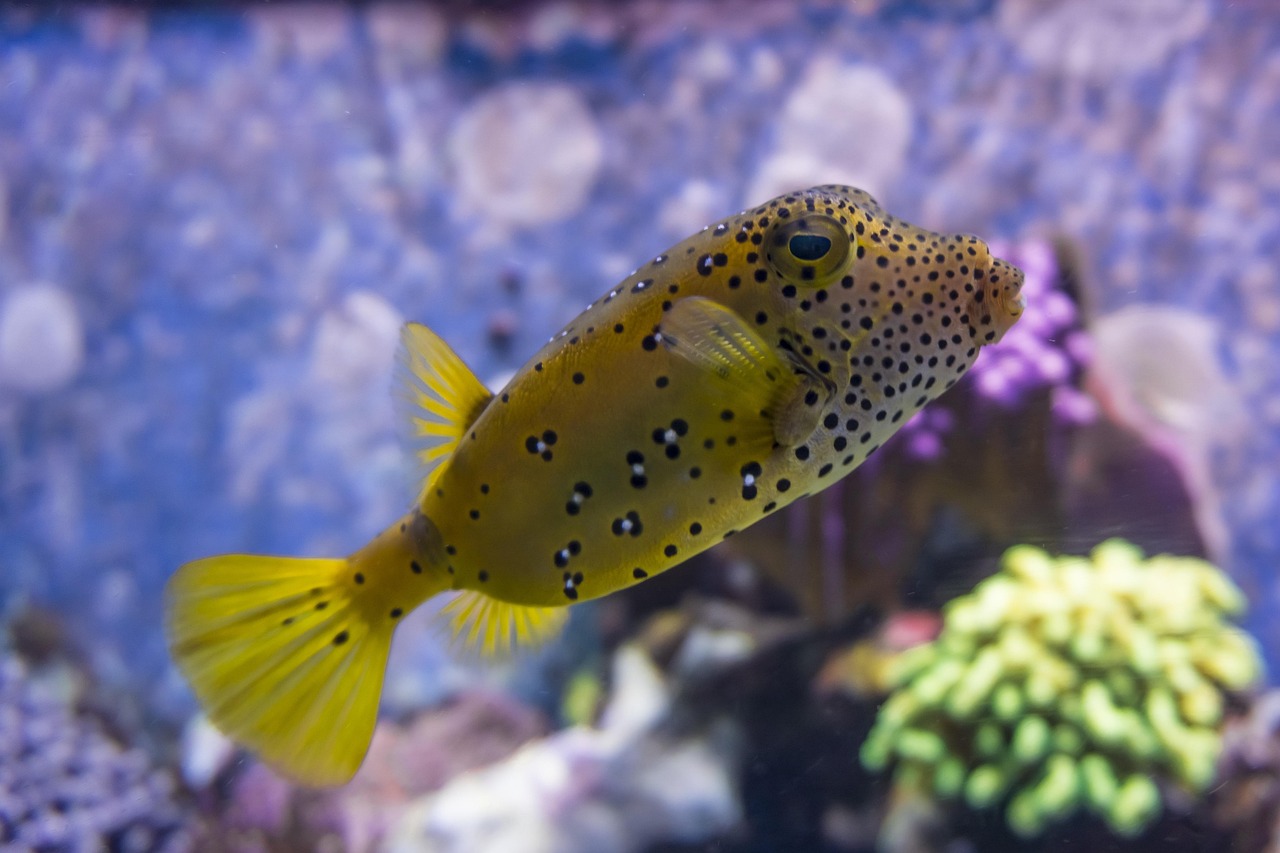
Watching a male pea puffer court a female is one of the more theatrical performances in the nano fish hobby — he darkens dramatically, flares a stripe down his flank, and practically vibrates with urgency beside a female twice his apparent confidence. Getting to that point requires deliberate preparation. To breed pea puffers reliably you need the right sex ratio, a densely planted tank, live food conditioning, and enough patience to let the fish set the pace. This guide from Gensou Aquascaping at 5 Everton Park, Singapore covers the full process, from selecting a breeding group to raising fry.
Sexing and Group Composition
Carinotetraodon travancoricus is one of the few pufferfish with clear sexual dimorphism. Males develop a dark iridescent stripe running along the belly from chin to tail base, often accompanied by a network of dark facial lines around the eyes. Females are rounder in the body, lack the belly stripe, and tend to be slightly larger overall. Juveniles under about 1.5 cm are difficult to sex reliably — wait until they reach 2 cm before making decisions.
A breeding setup works best with a ratio of one male to two or three females. A single pair is possible but more stressful for the female, who will be courted relentlessly. Three males together typically results in the dominant male spending all his time chasing subordinates rather than breeding.
Setting Up the Breeding Tank
A 30–40 litre planted tank is sufficient for a trio. Dense vegetation is not optional — it provides spawning sites and gives females refuge from persistent males. Java moss (Taxiphyllum barbieri), fine-leaved stem plants like Rotala rotundifolia, and floating plants all serve important roles. Pea puffers scatter eggs individually among fine plants or on the substrate, so a moss-covered bottom encourages spawning behaviour.
Water parameters should target pH 7.0–7.8, temperature 24–28°C, and moderate hardness. PUB tap water in Singapore works well after dechlorination — its slight softness suits this species. A gentle sponge filter keeps water clean without creating currents that scatter eggs or exhaust fry.
Conditioning With Live Food
Live food is the single most reliable trigger for breeding behaviour. Feed the breeding group heavily for two to three weeks before introducing them together — live bloodworms, daphnia, and baby brine shrimp work well. Snails (pond snails or bladder snails) should be offered daily; they are the natural staple of this species and the hard shell material appears to contribute to reproductive condition. A female that is genuinely ready to spawn will be visibly gravid — her belly noticeably rounded and pale when viewed from above.
Courtship and Spawning Behaviour
Spawning is not always obvious. The male displays beside the female, body darkened and stripe intensified, nudging her flanks. If receptive, she leads him into dense vegetation where spawning occurs over scattered sites — a single event may deposit anywhere from 5 to 20 eggs. Eggs are transparent, about 1 mm in diameter, and extremely difficult to find among java moss. Males provide no parental care; females occasionally eat eggs but are far less consistent egg predators than some other species.
Unless you observe active egg predation, leaving the adults in the breeding tank is reasonable. However, removing adults to a separate container and allowing the breeding tank to function as a fry grow-out is the most productive approach.
Egg Incubation and Fry Care
Eggs hatch in three to four days at 26°C. Newly hatched fry are tiny — under 3 mm — and will absorb their yolk sac for another day or two before becoming free-swimming. At this stage they require infusoria or commercially prepared rotifers; baby brine shrimp nauplii are initially too large but become suitable within a week. Microworms are a practical alternative that many keepers culture at home with minimal equipment.
Fry growth is slow by community fish standards. Expect six to eight weeks before juveniles reach 1 cm and can accept small frozen foods. Keep the tank densely planted throughout to prevent stress, and perform small daily water changes — 10% per day using a slow drip — to maintain quality without shocking the fry with parameter swings.
Common Breeding Problems
The most frequent problem is female exhaustion from persistent male attention. If a female hides constantly, shows bite marks, or goes off food, remove the male for a week to allow recovery. Occasionally a male will show no interest in breeding despite full conditioning — this usually resolves itself if you briefly introduce a second male to trigger competitive behaviour, then remove the subordinate once spawning has occurred.
Fry failure to thrive after hatching almost always traces back to insufficient live food density. Infusoria cultures must be active before the eggs hatch, not started reactively. Pre-seeding a small jar of boiled lettuce water five days before expected hatching is standard practice for experienced breeders.
Related Reading
- Dwarf Pea Puffer Tank Mates: Who Can Survive With a Micro Predator?
- Dwarf Puffer vs Pea Puffer: Are They the Same Fish?
- How to Breed Indian Dwarf Puffers: Conditioning and Fry Care
- How to Breed Amano Shrimp: The Challenging but Rewarding Process
- How to Breed Assassin Snails: Slow but Steady Reproduction



