How to Breed Japanese Trapdoor Snails: Live-Bearing Viviparidae
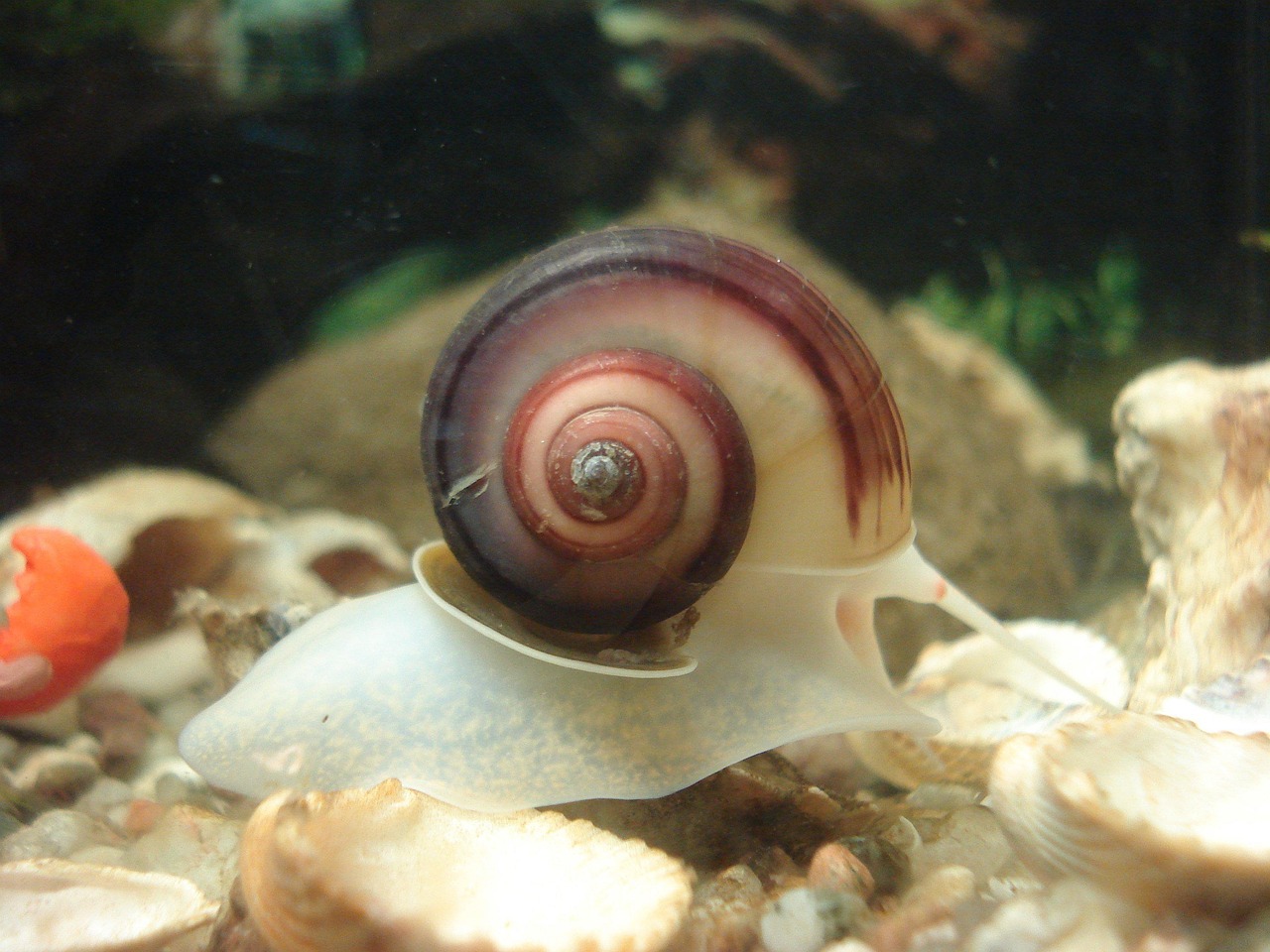
Unlike the pest snails that multiply explosively in aquariums, the Japanese Trapdoor Snail — Cipangopaludina japonica — reproduces slowly, delivers live young rather than laying masses of eggs, and earns its place in any planted tank by cleaning algae without touching healthy plant tissue. This breed Japanese Trapdoor Snail guide from Gensou Aquascaping at 5 Everton Park, Singapore covers the biology of this fascinating viviparid snail, the conditions that encourage reproduction, and what to expect when managing a small colony.
Understanding Live-Bearing Reproduction
Japanese Trapdoor Snails belong to the family Viviparidae — the live-bearers of the snail world. Females do not lay eggs; instead, they carry developing young internally for up to a year before releasing fully formed juvenile snails of 3–5 mm. This strategy produces few offspring compared to egg-laying snails, which is why populations grow slowly and predictably — a significant advantage for aquarists who want snail benefits without population explosions. A single female may produce 10–30 juveniles per year under good conditions.
Sexing Japanese Trapdoor Snails
Sexing is possible but requires close observation. Males have a modified right tentacle (the one on the right when the snail is facing you) that is shorter, thicker, and slightly curved — this serves as the reproductive organ. Females have two equally sized tentacles. You need at least one male and one female for reproduction, so purchasing a group of five or six gives you a reasonable chance of having both sexes represented without having to accurately sex each individual.
Tank Conditions for Successful Breeding
Japanese Trapdoor Snails prefer cool, well-oxygenated water — historically they thrived in Japan’s cool temperate ponds. In Singapore’s heat, they survive but breed more readily if kept at 22–25°C rather than the typical 28°C tropical tank temperature. A small chiller or dedicated cool-room setup makes a noticeable difference. They also prefer harder water than many tropical aquarium species: GH 8–15 and pH 7.0–8.0. The calcium content supports healthy shell growth; supplement with crushed coral or cuttlebone if your water is soft.
Feeding for Healthy Reproduction
In a mature aquarium, Japanese Trapdoor Snails graze continuously on algae, biofilm, and decaying plant matter. Supplement with blanched vegetables — courgette, cucumber, and spinach — placed on the substrate. Sinking algae wafers provide a reliable food source when natural algae is limited. A well-fed female in good condition produces more frequent and larger broods. Calcium-rich foods support both the mother’s shell and the development of the juvenile shells she carries.
Recognising Pregnancy and Caring for Gravid Females
A gravid female may appear slightly larger or rounder than usual, though this is subtle given their naturally round shell shape. The clearest sign of imminent birth is observing the female near the surface more frequently — a behaviour change thought to relate to oxygenation. Births can occur over several days; juveniles emerge ready to graze immediately. No special intervention is needed; young snails are fully formed and self-sufficient from birth. Do not move gravid females to separate tanks — the stress of transfer can cause the female to reabsorb or abort developing young.
Growing Out Juveniles
Juvenile Japanese Trapdoor Snails grow slowly, reaching adult size of 3–5 cm over one to two years. In a community aquarium they are perfectly safe with most fish; their operculum (the trapdoor that closes the shell opening) protects them from mild harassment. More aggressive fish such as pufferfish, larger loaches, and some cichlids should not be kept with them. In Singapore, there is modest demand for these snails on Carousell, where they sell at $1–$3 each — more than pest snails but worth the premium for aquarists wanting a manageable, algae-grazing addition.
Common Problems and Solutions
Shell pitting or thin, fragile shells indicate calcium deficiency — increase mineral content in the water or supplement feeding with calcium-rich foods. Found floating at the surface, a trapdoor snail is not necessarily dead; they sometimes float to redistribute gas or explore. Check responsiveness by placing the snail on a hard surface — a live snail will retract and eventually extend its foot again. A snail that stays fully retracted with no response and emits an odour is deceased and should be removed promptly to protect water quality.
Related Reading
- How to Breed Assassin Snails: Slow but Steady Reproduction
- How to Breed Amano Shrimp: The Challenging but Rewarding Process
- Assassin Snail vs Pest Snails: How Effective Are They Really?
- How to Breed Bamboo Shrimp: Larval Stages and Brackish Requirements
- How to Breed Betta Imbellis: Peaceful Wild Betta Spawning

emilynakatani
Still Have Questions About Your Tank?
Drop by Gensou Aquascaping — most walk-in questions get answered in under 10 minutes by someone who has set up hundreds of tanks.
5 Everton Park #01-34B, Singapore 080005 · Open daily 11am – 8pm