Rabbit Snail Species Compared: Orange, Yellow and Chocolate
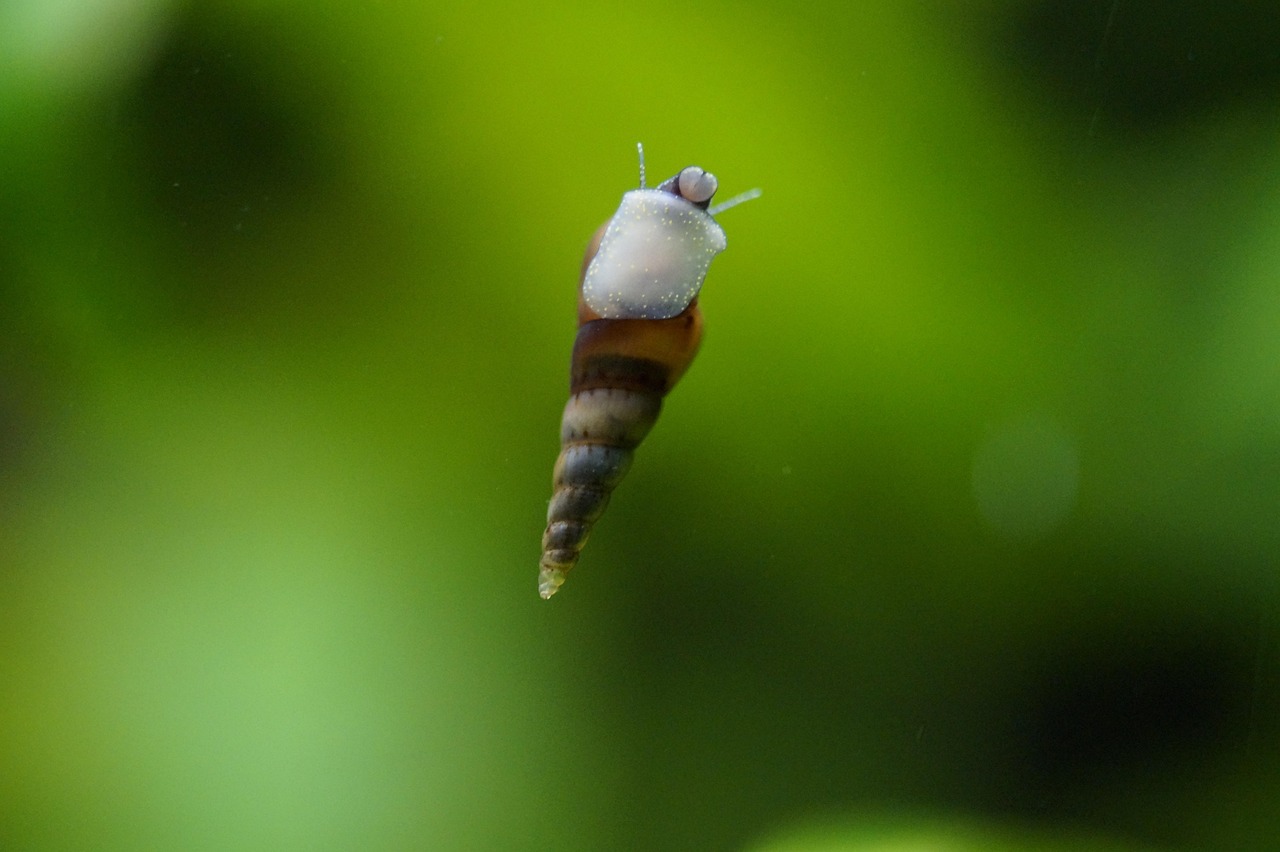
Rabbit snails are among the most characterful gastropods available to freshwater aquarists — slow-moving, long-lived, and available in a surprisingly diverse range of shell and body colours. A proper rabbit snail species comparison is useful because what gets sold under a single “rabbit snail” label in shops often represents distinct species or colour morphs with slightly different requirements and appearances. Gensou Aquascaping at Everton Park, Singapore stocks several colour forms and this guide covers the three most commonly kept: orange, yellow and chocolate.
What Rabbit Snails Actually Are
All rabbit snails belong to the genus Tylomelania, endemic to the ancient lake systems of Sulawesi, Indonesia. They are live-bearing — females give birth to a single juvenile at a time, encased in a small egg sac — which makes them slow to reproduce compared to pond or ramshorn snails. The name comes from the snout-like anterior of the head, which protrudes distinctly and moves with an almost mammalian quality as the snail grazes. Most species reach 5–8 cm shell length at maturity, making them visually impactful in medium to large planted tanks.
Orange Rabbit Snail: Tylomelania zemis
Tylomelania zemis is the most widely available rabbit snail in Singapore and often what shops mean when they say “rabbit snail” without qualification. The shell is dark brown to nearly black with a highly sculptured, multi-spiral conical shape. The body — head, foot, and mantle — is a vivid orange, sometimes deepening to burnt orange in mature individuals. Under warm aquarium lighting, the contrast between dark shell and orange body is striking. This species tolerates a wider parameter range than some Sulawesi endemics: pH 7.2–8.0, GH 8–15, temperature 25–28°C. Singapore tap water is slightly too soft at GH 2–4; supplementing with crushed coral or a hard-water mineral mix raises GH appropriately.
Yellow Rabbit Snail: Tylomelania towutica
Tylomelania towutica displays a pale yellow to cream body rather than the orange form’s vivid colouration. Shell colouration ranges from light tan to golden-yellow — notably lighter than T. zemis — with a smoother, less deeply sculpted surface texture. This form commands a slight premium in Singapore, priced at $6–12 per snail compared to $4–8 for the orange form, owing to lower import availability. Care requirements are virtually identical: hard, alkaline water, warm temperature, and sandy substrate for burrowing. Yellow rabbit snails are slightly smaller on average, rarely exceeding 6 cm, which makes them more suitable for tanks under 80 litres.
Chocolate Rabbit Snail: Tylomelania sp. “Chocolate”
The chocolate rabbit snail — often unlabelled to species level in trade — carries a deep brown to near-black body colouration with a correspondingly dark shell. The overall effect is a monochromatic, earthy animal that reads very differently in an aquascape from the high-contrast orange form. Despite the similar appearance between shell and body, subtle textural differences in the foot and tentacle patterning give the animal visual depth under close observation. Chocolate forms are generally rarer in Singapore than orange; when available, prices of $10–18 reflect their import scarcity.
Water Chemistry: The Non-Negotiable
All rabbit snail species share a critical requirement: hard, alkaline water. Their Sulawesi lake origins mean they evolved in ancient, mineral-rich waters with pH consistently above 7.5 and GH above 10. Keeping rabbit snails in soft, acidic water — common in shrimp tanks using active substrate — causes shell erosion, thin shells, and reduced lifespan. Singapore hobbyists maintaining shrimp tanks with ADA Amazonia or similar buffering substrates should avoid adding rabbit snails unless they run a separate hardwater section or a dedicated rabbit snail tank with buffered substrate and crushed coral.
Feeding and Behaviour
Rabbit snails are omnivorous but strongly prefer plant matter, algae, and decaying leaf litter. They will graze java fern, Cryptocoryne, and Anubias without significant damage to healthy plants but may graze on softened, older leaves. Supplement with blanched courgette, cucumber, algae wafers, and dried catappa or mulberry leaves. The burrowing behaviour is characteristic: rabbit snails frequently half-bury themselves in substrate, leaving only their shell visible — this is normal and not a sign of distress. A minimum substrate depth of 4–5 cm in fine sand accommodates this behaviour.
Breeding and Juvenile Care
Rabbit snails are remarkably slow breeders. A female produces one juvenile every four to eight weeks under good conditions. The juvenile emerges at 5–10 mm — already a recognisable miniature rabbit snail — and requires no special care beyond the same conditions as adults. Shell damage in juveniles, indicated by pitting or white edges, signals insufficient calcium in the water; add a small piece of cuttlebone to the tank if this occurs. Despite slow reproduction, rabbit snails live 3–5 years, so a small group of four to six individuals will slowly build into a sustainable colony over time.
Related Reading
- Golden Rabbit Snail Care Guide: Sulawesi’s Slow-Moving Beauty
- Nerite Snail Species Comparison: Zebra, Tiger, Horned and Olive
- Rabbit Snail Breeding Guide: Tylomelania Live Bearers
- How to Breed Assassin Snails: Slow but Steady Reproduction
- Assassin Snail vs Pest Snails: How Effective Are They Really?

emilynakatani
Still Have Questions About Your Tank?
Drop by Gensou Aquascaping — most walk-in questions get answered in under 10 minutes by someone who has set up hundreds of tanks.
5 Everton Park #01-34B, Singapore 080005 · Open daily 11am – 8pm