
Cherry Shrimp vs Amano Shrimp: Which Cleaner Suits Your Tank?
Walk into any aquascaping shop in Singapore and you’ll find both cherry shrimp and Amano shrimp jostling for shelf space — and for good reason. Both are excellent algae eaters, both thrive in planted tanks, and both look stunning against green aquatic plants. But the cherry shrimp vs Amano shrimp comparison reveals real differences in size, cleaning power, breeding behaviour and water chemistry needs. Gensou Aquascaping at 5 Everton Park has kept and sold both species for years, and this guide will help you decide which one — or which combination — belongs in your tank.
Size and Appearance
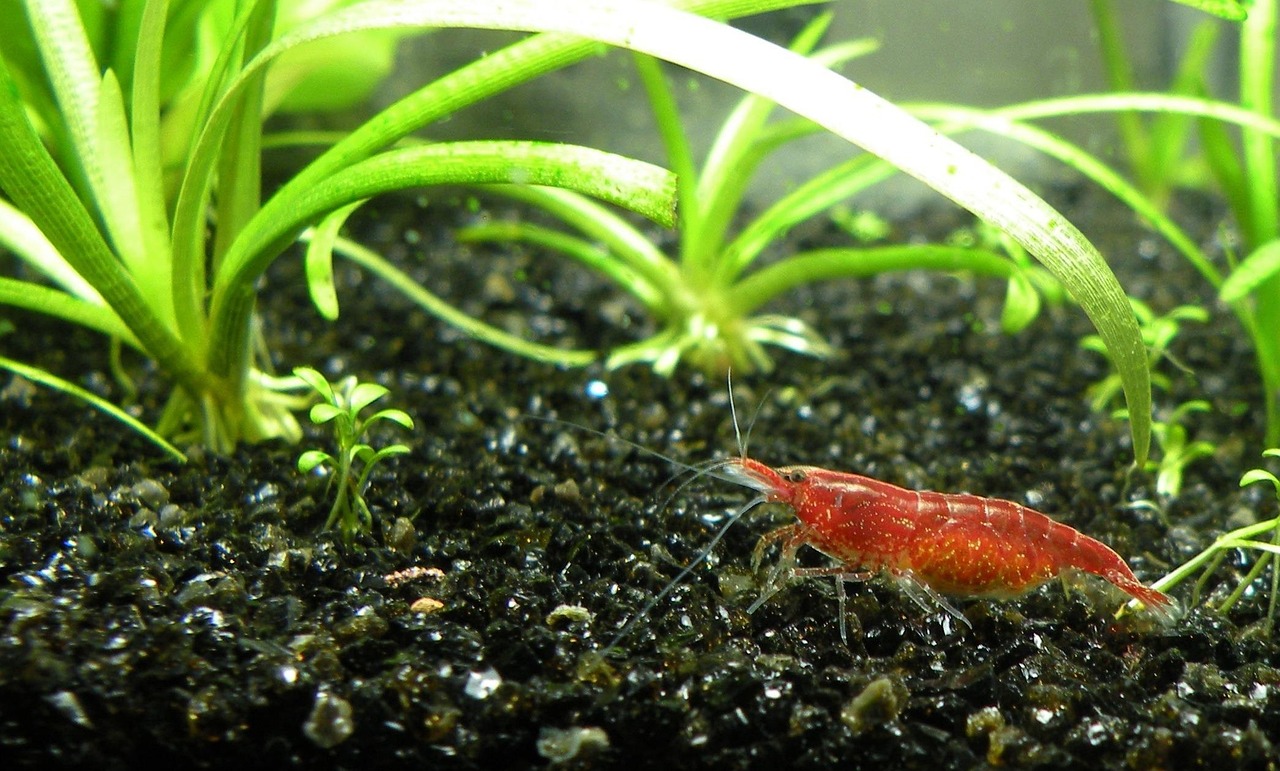
Neocaridina davidi var. Red — the cherry shrimp — reaches about 2.5–3 cm as an adult female, with males slightly smaller. Their vivid red colouration ranges from pale pink in lower-grade specimens to deep, opaque crimson in Painted Fire Red lines. Caridina multidentata, the Amano shrimp, is a noticeably larger animal: females regularly reach 4–5 cm, making them one of the biggest dwarf shrimp available in the hobby.
Amano shrimp are translucent grey-green with a row of dotted or dashed markings along each flank. They’re not colourful in the traditional sense, but under good lighting they have an elegant, understated look that suits Nature Aquarium-style layouts particularly well.
Algae Cleaning Power
This is where the two species diverge most significantly. Amano shrimp are voracious, hardworking algae grazers. A group of 6–10 adults will visibly reduce thread algae, staghorn algae, and soft green spot algae within days. Takashi Amano popularised them precisely because their cleaning ability is unmatched among shrimp.
Cherry shrimp do clean algae, but more selectively. They prefer biofilm, soft algae coatings on leaves, and the fine hair algae that accumulates on slow-growing plants. In a moderately planted tank with a manageable algae load, a colony of 20–30 cherry shrimp does respectable maintenance work. If you’re battling a heavy algae outbreak, though, Amano shrimp are the stronger choice.
Breeding Behaviour
Cherry shrimp breed freely and prolifically in freshwater. A healthy colony in a stable tank will double in population within a few months. Females carry small clutches of 20–50 eggs under their tails for about 30 days, and the juveniles are fully formed miniature shrimp at hatching — no special intervention needed.
Amano shrimp, by contrast, do not breed in freshwater. Females produce thousands of microscopic larvae that must be transferred to brackish water (salinity around 30–35 ppt) to develop through multiple larval stages before metamorphosing into juveniles. This complex lifecycle means most hobbyists source Amano shrimp commercially rather than breeding them at home. In Singapore, a group of ten adults costs roughly $12–25 depending on size.
Water Parameter Requirements
Cherry shrimp are adaptable. Singapore’s PUB tap water — soft, slightly acidic, chloramine-treated — suits them well once aged or run through a carbon filter. They tolerate a pH of 6.5–8.0 and GH of 4–10. Higher-grade red cherry lines bred for intense colour can be a touch more sensitive, but standard cherry shrimp are genuinely beginner-friendly.
Amano shrimp are similarly tolerant and arguably even more robust. They handle a wider temperature range (18–28°C) and adapt to most tap water conditions without issue. In Singapore’s ambient temperatures of 28–30°C, neither species requires a heater — though a small fan or chiller may be worth considering during the hottest months if you want to keep the tank at the cooler end of their range.
Compatibility With Tank Mates
Size matters here. Cherry shrimp are small enough to be seen as food by many fish — tetras, guppies, and danios will pick off juveniles and even adults given the chance. They work best in a species-only tank or alongside the smallest, most peaceful nano fish such as ember tetras or chili rasboras.
Amano shrimp are large enough to hold their own with most community fish. Their size deters casual nibbling, and they’re fast enough to escape most predators. They coexist well with medium-sized tetras, rasboras, corydoras, and most peaceful cichlids, making them the more versatile community tank addition.
Which Should You Choose?
If you want a self-sustaining colony that multiplies on its own, adds vivid colour, and suits a shrimp-focused setup, cherry shrimp are the clear answer. If you want serious algae-busting power, impressive size, and a shrimp that holds its own in a community tank, Amano shrimp deliver.
Many experienced planted tank keepers at Gensou Aquascaping combine both: a small team of Amano shrimp for heavy cleaning duty and a cherry shrimp colony for colour, biofilm management, and the quiet satisfaction of watching a population thrive. The two species coexist without issue, and together they cover almost every maintenance role a planted tank requires.
Related Reading
- Amano Shrimp vs Cherry Shrimp: Which Is Better for Your Tank?
- Amano Shrimp Breeding Challenges: Larval Stages and Saltwater Phase
- How to Breed Amano Shrimp: The Challenging but Rewarding Process
- Amano Shrimp vs Otocinclus: Which Algae Crew Wins?
- Cherry Shrimp Colour Grading Guide: From Lowest to Painted Fire Red

emilynakatani
Still Have Questions About Your Tank?
Drop by Gensou Aquascaping — most walk-in questions get answered in under 10 minutes by someone who has set up hundreds of tanks.
5 Everton Park #01-34B, Singapore 080005 · Open daily 11am – 8pm


