
Longnose Hawkfish Care Guide: Oxycirrhites Typus Perching Predator
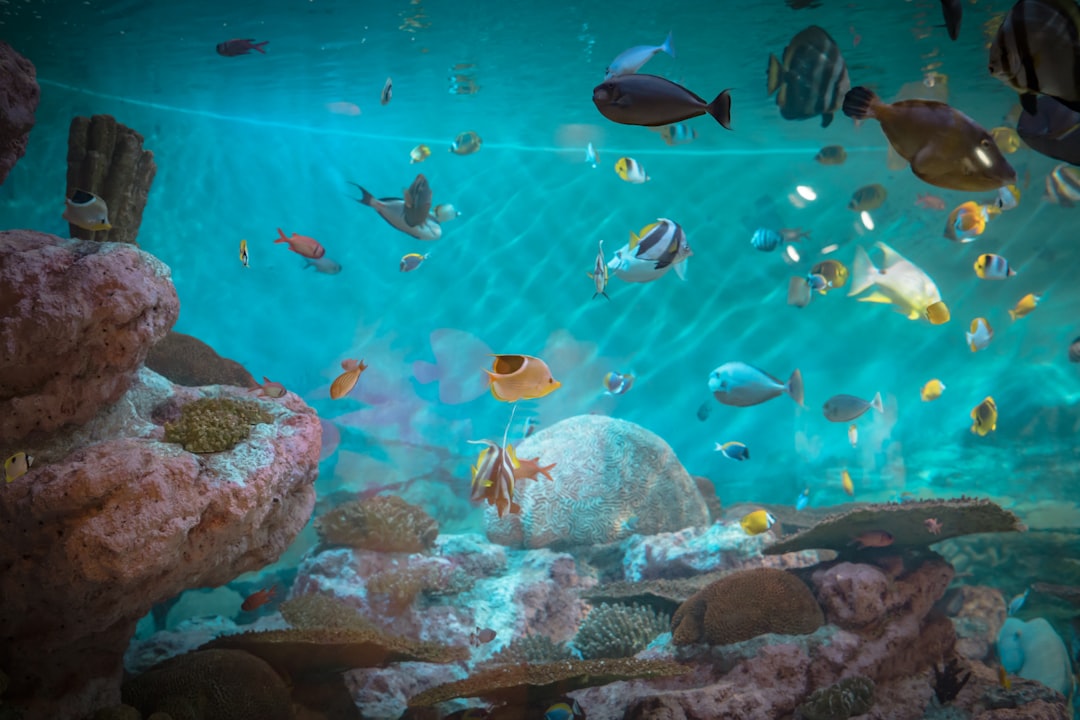
Perched atop a gorgonian or sea fan with its elongated snout pointed downward, the longnose hawkfish cuts one of the most distinctive silhouettes on any reef. Oxycirrhites typus is the sole member of its genus, a sit-and-wait predator that combines striking red crosshatch patterning with an endearing habit of watching everything that moves in the aquarium. This longnose hawkfish care guide from Gensou Aquascaping at 5 Everton Park, Singapore details how to house and feed this fascinating perching predator.
Natural Habitat
Longnose hawkfish inhabit outer reef slopes and drop-offs at depths of 10-100 metres across the Indo-Pacific and Eastern Pacific. They favour gorgonian sea fans and black coral branches as perching sites, using modified pectoral fin rays to grip the branches firmly. In the wild, a single hawkfish may claim a territory spanning several coral heads, darting out to snatch passing zooplankton and small crustaceans before returning to its vantage point.
Tank Size and Aquascaping
Provide a minimum of 150 litres for a single longnose hawkfish. While the fish itself reaches only 12-13 cm, it needs vertical rockwork or branching structures for perching. Tall gorgonians, branching SPS colonies and decorative coral replicas all serve as suitable perches. Without elevated positions, the hawkfish becomes stressed and reclusive. Arrange rockwork to create multiple levels and open swimming lanes, allowing the fish to survey the tank as it would a natural reef wall.
Water Parameters
Target salinity of 1.024-1.026 SG, temperature between 24 and 27 degrees C, pH of 8.1-8.4 and alkalinity at 8-11 dKH. The lower end of the temperature range is preferred, which means Singapore hobbyists should budget for active cooling. A chiller maintaining 25-26 degrees C keeps these fish in peak condition. Longnose hawkfish are reasonably tolerant of parameter variation but do best with stable conditions maintained through consistent water changes of 10-15 per cent weekly.
Feeding Requirements
Hawkfish are carnivorous ambush feeders. Offer frozen mysis shrimp, enriched brine shrimp, chopped krill and small pieces of fresh seafood. Most specimens transition quickly to high-quality marine pellets, which simplifies long-term feeding. Their elongated snout allows them to pick food from crevices with precision. Feed two to three times daily in small amounts, as hawkfish have fast metabolisms relative to their size. Vitamin supplements added to frozen foods help maintain the vibrant red patterning.
Compatibility Concerns
Here is where careful planning matters. Longnose hawkfish will eat any crustacean or fish small enough to fit in their mouth. Ornamental shrimp, small gobies, sexy shrimp and tiny wrasses are all potential prey. Cleaner shrimp above 3 cm are usually safe, but no guarantees exist for peppermint shrimp or juvenile specimens. Fire shrimp and coral-banded shrimp generally coexist due to their larger size. Compatible fish include clownfish, tangs, larger wrasses, angelfish and dottybacks.
Reef Safety
Longnose hawkfish do not damage corals directly. However, their perching habit means they rest on coral colonies regularly, and heavy-bodied individuals can irritate polyp tissue through repeated contact. SPS corals with robust branches tolerate this well. Delicate chalice corals or open-brain LPS placed at perching height may show tissue recession from constant pressure. Position sensitive corals away from the fish’s preferred resting spots to avoid issues.
Behaviour and Personality
Few reef fish display the watchful intelligence of a longnose hawkfish. They follow movement outside the tank, recognise their keeper and often adjust their perching position to maintain a clear sightline to the room. Males are protogynous hermaphrodites, starting life as female and transitioning when no dominant male is present. Keeping two together is possible in tanks above 300 litres, where the larger individual will typically become male. Fighting between same-sex individuals can be intense in confined spaces.
Sourcing and Pricing in Singapore
Longnose hawkfish are regularly stocked at marine fish shops along Serangoon North Avenue 1 and at specialist outlets. Prices range from $30-$50 SGD depending on size and colour intensity. Select specimens that are actively perching rather than lying on the substrate, as lethargy suggests stress or disease. A two-week quarantine with observation is sufficient for most healthy arrivals, though prophylactic treatment for flukes is worth considering given the species’ wild-caught origins.
Related Reading



