
Blue Diamond Discus Care Guide: Solid Blue Variety
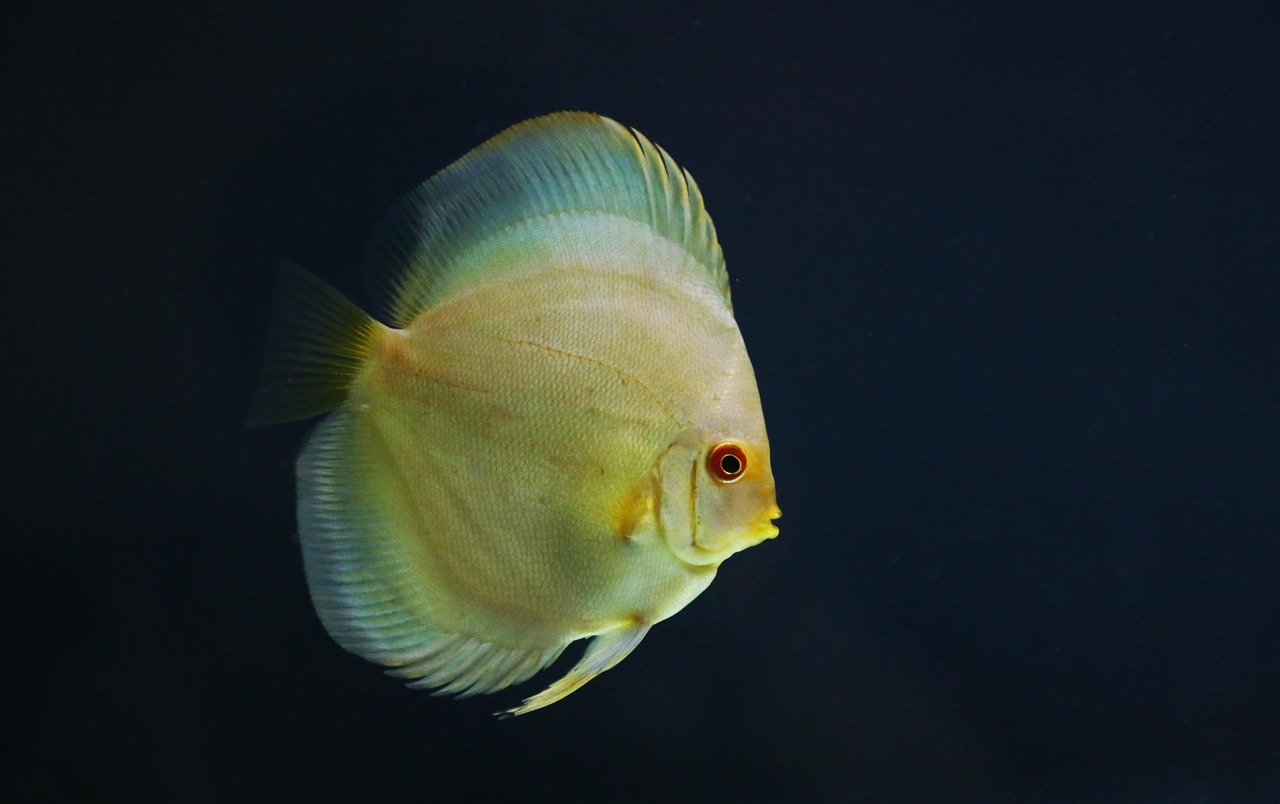
The blue diamond holds a cult following among discus keepers because it carries a near-uniform metallic blue body with no bars, pepper, or pattern distractions. This blue diamond discus care guide from Gensou Aquascaping in Singapore covers its origin in late 1990s Asian breeding programmes, its sensitivity relative to red strains, and the conditions that preserve its signature electric-blue sheen. It is selectively bred Symphysodon aequifasciatus, not a wild form.
Quick Facts
- Species: Symphysodon aequifasciatus, blue diamond selection
- Adult size: 15-18 cm
- Temperature: 28-30°C
- pH: 6.5-7.2
- Body colour: uniform metallic cobalt to turquoise blue
- Origin: Malaysia and Hong Kong, late 1990s
- Sensitivity: moderate, lower stress tolerance than red strains
Origin and Genetic Background
Blue diamond was developed from cobalt blue and turquoise discus lines by fixing the full-body blue gene while suppressing pattern. The earliest stable fish came out of Malaysian breeders in the mid-1990s, with Hong Kong farms refining body shape soon after. Unlike pigeon-derived strains, blue diamonds have black eyes, not red; red-eyed variants are a separate recent development.
Selecting Healthy Stock
Juveniles at 7-9 cm should show uniform blue across the flanks without pale patches, a round body shape, clear black eyes, and upright fins. Weak blue diamonds often reveal white or grey ventral patches that worsen with growth. Feeding test matters; this strain refuses food faster under stress than red varieties, so a juvenile that takes frozen bloodworm on the shop floor is a better bet than one that hides.
Tank and Filtration
Six adults need 300 litres, tall format. Blue diamonds show their colour best against a matte black or deep blue background rather than a neutral cream. Keep the substrate light or bare for easier cleaning. Run a canister at six to eight times turnover, paired with a cycled sponge filter for redundancy. Flow should be gentle and diffused; strong current makes blue diamonds hold bar patterns more frequently.
Water Parameters
Blue diamonds handle Singapore PUB tap water after dechlorination but reward slightly softer conditions with deeper colour. Target 28-30°C, pH 6.5-7.0, GH 3-6, KH 1-3, conductivity 200-400 µS. Stability is critical; this strain shows stress faster than red discus by fading to a dull greyish-blue. Weekly 50 per cent changes matched on temperature are the baseline, with daily 30 per cent for juveniles.
Lighting and Colour Management
Blue pigment is structural rather than chemical, meaning it depends on light refraction through the skin. Cool-white LEDs at 6500-8000K intensify the metallic blue, while warm yellow lighting mutes it. Keep intensity moderate because excessive brightness washes out the sheen. A dark background, dark substrate, or both help the blue body pop visually. Photoperiod at eight hours suits a high-feed system without encouraging algae.
Feeding Programme
Feed variety. Frozen bloodworm, mysis, brine shrimp, and a quality discus pellet provide the base. Beefheart mixes can be used two to three times weekly if portioned tightly and rinsed. Unlike red strains, blue diamonds gain no colour benefit from astaxanthin-heavy foods; spirulina and krill help overall skin health without altering the blue tone. Juveniles eat four small meals daily; adults accept two with an occasional fast day.
Behaviour and Tank Mates
Blue diamonds keep to themselves within a group, establishing a loose hierarchy. Compatible tank mates include cardinal tetra, rummy-nose tetra, sterbai corydoras, and Amano shrimp. Avoid fast, nippy fish that cause bar-up stress. Angelfish should never share a discus tank because of shared pathogens.
Health Considerations
Blue diamonds appear more prone to gill flukes than red strains, possibly because many farms move stock through multiple transhipments. Quarantine new arrivals for four weeks in a bare tank. Praziquantel at 2.5 mg/l over seven days clears most fluke infections. Hexamita responds to metronidazole at 400 mg per 40 litres every 48 hours for three treatments. A darkened body that will not bar down is the early warning for chronic stress or parasites.
Breeding Notes
Blue diamond pairs form from groups of six or more juveniles around 14 months. They spawn on vertical slate or cones. Fry inherit blue uniformly; outcrosses to turquoise or cobalt blue produce mixed pattern offspring. Parental slime feeding works as in other strains, though some blue diamond pairs are less attentive and benefit from artificial rearing support.
Singapore Market and Pricing
Juvenile blue diamonds sit around $40-80 at specialist shops near Clementi Avenue 3 and Serangoon. Show-size 14 cm fish from Malaysian and Thai farms reach $200-400. Ask for farm of origin, batch number, and confirm the fish have been quarantined post-import.
Related Reading



