
Monosolenium Tenerum Care Guide: Pellia Liverwort
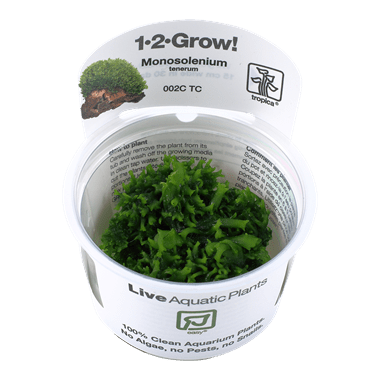
Monosolenium tenerum is not a moss at all — it is a liverwort that behaves like one, which is why most hobbyists buy it from the moss section. This monosolenium tenerum care guide draws on two decades of planted tank work at Gensou Aquascaping in Everton Park. Commonly called Pellia, Monosolenium tenerum produces wide, flat, branching thalli that look like miniature seaweed. It is fragile, brittle, and will not grip hardscape without mesh, but the finished look is unlike anything else in the hobby.
Quick Facts
- Scientific name: Monosolenium tenerum, formerly Pellia endiviifolia
- Type: thallose liverwort, not a true moss
- Frond size: 5-10mm wide, branching dichotomously
- Light: low to medium, 30-50 PAR
- Temperature: 18-28°C, borderline in uncooled Singapore tanks
- CO2: strongly recommended for dense growth
- Attachment: mesh pads only — brittle, cannot be tied with thread
Understanding Its Fragility
Monosolenium tenerum has no true rhizoids. The thalli are brittle, break apart at the slightest tug, and will not hold thread wraps or withstand handling. This is the single most important thing to know before buying — any plan that involves tying Pellia with cotton thread ends with a disintegrated lump within minutes. Pressure between two layers of mesh is the only reliable way to anchor it.
Mesh Pad Method
Cut two squares of stainless steel mesh slightly larger than the Pellia portion. Spread the liverwort in a thin layer on one mesh, lay the second on top, and stitch the edges closed with thin fishing line. The pad can then be placed on substrate, wedged between stones, or screwed onto driftwood. Over six to eight weeks the Pellia grows through the mesh and the metal disappears beneath the foliage.
Light and Growth
Under moderate light the thalli stay broad and flat. A Chihiros WRGB II at 40-50% over 60cm provides the 30-50 PAR the species likes. In high light the liverwort stays compact but the colour shifts toward yellow-green; in low light the thalli stretch longer and darker. Growth is slow — expect full mesh coverage over two to three months even with CO2.
CO2 and Fertiliser
Pellia grows without CO2 but the difference with injection is dramatic. CO2 at 25-30ppm produces thick, lush thalli with deep colour; without it, the foliage stays sparse and algae invades. A standard lean EI dose covers macro and micro needs. The species is less sensitive to iron than Taiwan moss and tolerates generous Seachem Flourish dosing.
Temperature in Singapore
Monosolenium tenerum handles temperatures up to 28°C without problems. At 29-30°C in uncooled HDB tanks the growth slows and algae pressure increases. A small clip-on fan dropping temperature 2-3°C usually restores healthy growth. The species does not require cool-water setups, which makes it more practical than willow moss for local keepers.
Shrimp Tank Applications
Pellia is a favourite in Caridina shrimp tanks because the dense thalli trap microfauna that shrimplets graze on. The fragile nature means shrimp cannot damage it — they climb over the foliage without tearing it. Pair with cherry shrimp or Crystal Red colonies on an Ada Amazonia substrate and the Pellia mesh becomes the visual centrepiece of the layout.
Common Problems
Green dust algae films the thalli in high-light low-nutrient setups. Siamese algae eaters and nerite snails keep the surface clean. If the foliage starts dropping chunks spontaneously, check CO2 stability — sudden drops cause the cell walls to weaken and break apart. Brown patches underneath dense pads signal trapped detritus; lift the pad, rinse gently, and siphon underneath before replacing.
Related Reading
Mini Pellia Riccardia Care Guide
Best Aquarium Moss Mesh Pad
Aquarium Moss Types Compared
Fissidens Moss Care Guide
How to Attach Moss to Mesh



