
Red Racer Shrimp Species Care Guide: Neocaridina Speckled
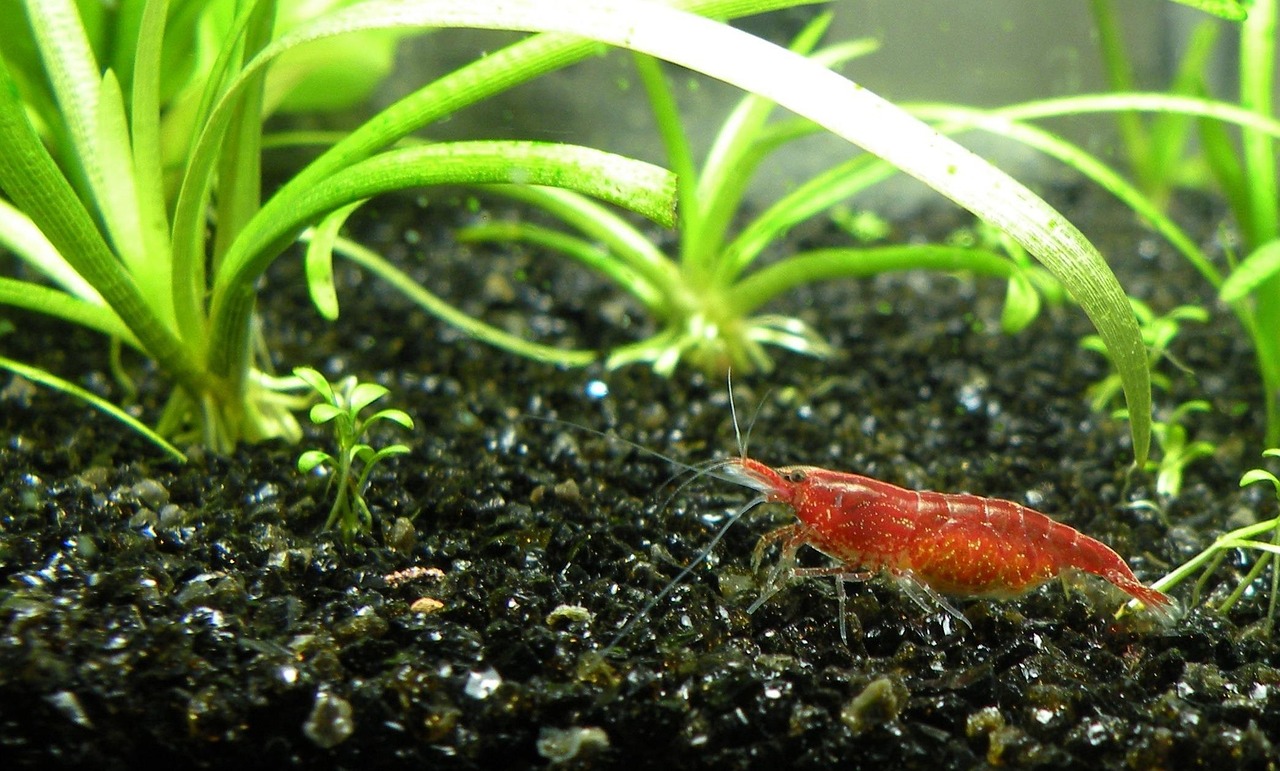
Red Racer is the unofficial trade name for a speckled Neocaridina davidi line carrying patches of deep red over a mottled clear-to-cream body — the pattern reads almost like a miniature koi, which is exactly why serious shrimp keepers either love them or dismiss them as unstable culls from a koi line. This red racer shrimp species care guide from Gensou Aquascaping at 5 Everton Park clarifies what you are actually buying, how to keep them breeding cleanly in Singapore tap water, and why the line requires tighter culling than standard cherries to stay photogenic.
Species and Lineage
Red Racers are Neocaridina davidi, the same species as cherry, blue dream and rili shrimp. Most Singapore stock descends from Taiwanese and Malaysian koi shrimp lines, specifically the Red Koi branch whose speckle pattern is marketed under names including Racer, Pinto-Neo and Dalmatian Red. The genetics are not fully stable — expect only 50 to 70 percent of offspring to show photo-worthy pattern density. Read the Neocaridina colour morphs primer before comparing lines.
Tank Size and Setup
A 30 to 60 litre rimless tank with gentle filtration suits a starter colony of 15 to 20 Red Racers. Inert substrate such as fine black sand or ADA La Plata works — they do not need active soil since they are Neocaridina, not Caridina. Plant the tank with moss, dwarf sag and a few stems; the contrast between green backgrounds and red-speckled shrimp is visually stronger than against dark substrate alone.
Water Parameters
Red Racers tolerate a wider range than CRS but still prefer stable values: TDS 180 to 300 ppm, GH 6 to 10, KH 2 to 6, pH 6.8 to 7.6 and 23 to 27 degrees. Singapore PUB tap treated with a quality conditioner usually hits these values with only a GH booster for insurance. Our cycle walkthrough covers the eight-week maturation window that prevents the first fry from dying to ammonia spikes.
Filtration and Flow
A matured sponge filter plus a small internal or hang-on-back with a mesh intake sock is ideal. Neocaridina handle slightly higher flow than Caridina, but avoid anything that pulls fry or berries into impellers. Filter media should be lightly stocked with mature biomedia to keep ammonia at zero. Replace carbon chemical media with more biomedia — shrimp tanks do not need carbon in normal operation.
Feeding a Colour-Driven Line
Feed every other day with rotations of spirulina flakes, Shirakura ebi dama, boiled organic spinach, mulberry leaf and the occasional bloodworm. The red intensity in Racers responds strongly to astaxanthin-rich food; Hikari shrimp cuisine and Benibachi Red Bee formulas visibly deepen red patches within two to three weeks. Over-feeding causes TDS creep and planaria outbreaks — read our planaria prevention notes.
Breeding Rate and Pattern Retention
Females saddle from around three months and carry 20 to 35 eggs per berry. Incubation runs 21 to 28 days at 25 degrees. Expect full-coloured Racers at around four to six weeks post-hatch. Pattern retention — not colour density — is the hard part: without culling, the line drifts towards either solid red or washed pinto within three generations. Review our Neocaridina colour line breeding for the weekly culling cadence.
Culling Workflow
Pull any offspring without clear red patches and any showing solid body colour from three weeks of age. Move culls to a separate display tank or sell on as pet-grade Neocaridina. Keep only animals showing sharp speckle edges and at least 40 percent red coverage. This culling rhythm drops your colony growth rate but holds pattern quality across generations.
Singapore Climate Notes
Neocaridina tolerate Singapore’s ambient 28 to 30 degrees better than Caridina, but breeding rate drops measurably above 28 degrees. A small clip fan across the surface, or a shallow chiller holding 25 to 26 degrees, improves egg viability noticeably. HDB flats with full-day aircon in adjacent rooms often hit ideal temperatures passively through shared walls.
Tank Mates and Compatibility
Keep Racers in a species-only tank if colour line work matters. If you must add tank mates, stick to small peaceful species — Otocinclus, pygmy corydoras, nerite snails. Do not mix with cherry or rili Neocaridina; interbreeding muddles the Racer pattern within one generation. Avoid any fish that predate fry; our shrimp-safe fish reference applies strictly.
Common Problems
The three issues that kill Racer colonies in Singapore are copper contamination from new decor or medications, TDS crashes from heavy rain altering tap water chemistry, and temperature swings during power cuts. Drip-acclimate all new shrimp for at least 90 minutes — the method in our drip acclimation guide holds post-transit losses under 10 percent.
Sourcing and Pricing
Red Racers are priced $4 to $12 per head at C328 and Carousell breeders, with premium photo-grade animals reaching $18 to $25. Avoid bulk tub sales from shops labelling everything as “red racers” — in practice those are often unstable culls. Buy from a Singapore breeder who photographs the parent tank, or expect to cull half your first batch. Budget $150 to $300 for a clean starter group of fifteen.
Related Reading



