Best Background Films and Vinyl for Aquariums
The back glass of an aquarium is the single largest visual element in the entire setup, yet it is the one that hobbyists most often leave as an afterthought. An unfinished back wall — revealing cables, the wall behind, or the filter intake pipes — undermines even a well-planted aquascape. The best aquarium background films and vinyl solve this instantly and inexpensively, improving visual depth, making fish colours pop against a consistent backdrop, and concealing equipment. This guide from Gensou Aquascaping at 5 Everton Park, Singapore covers the main types, their respective advantages, and how to apply them cleanly.
Solid Colour Backgrounds: Timeless and Versatile
Solid colour backgrounds are the most popular choice among serious aquascapers. Black is the overwhelming favourite — it creates depth, eliminates glare on the back glass from external light sources, and provides the highest colour contrast for bright fish, red plants, and green carpets. On a planted tank with red stem plants like Rotala macrandra or Ludwigia arcuata, a black background makes the reds visually explode. Dark blue is a softer alternative that reads as water depth and suits marine-themed freshwater setups or Southeast Asian biotopes. White and light grey backgrounds are used for Taiwanese-style aquascapes and show fish colouration differently — useful for photography but less dramatic in typical room lighting.
Solid colour backgrounds are available as adhesive vinyl, static cling, or simply taped paper on the outer back glass. Static cling is the easiest to apply and remove cleanly. Adhesive vinyl provides a more permanent finish. A roll of quality black aquarium vinyl costs $5 to $15 depending on width and length, available from local fish shops and on Shopee.
Nature Print and 3D Effect Backgrounds
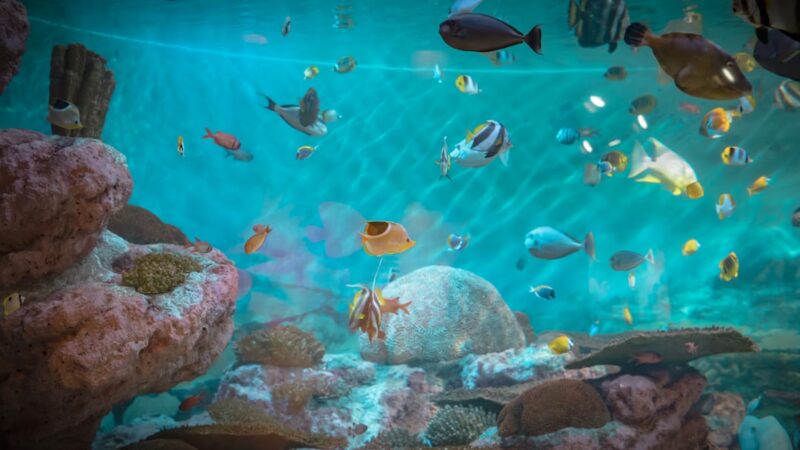
Printed backgrounds depicting underwater scenes, rock formations, Amazon jungles, or coral reefs are popular for naturalistic displays and children’s aquariums. The quality range is enormous — from pixelated poster-quality prints that look unconvincing at close range, to high-resolution photographic vinyl that creates genuine trompe-l’oeil depth effects. For a display tank where the aquascape is the focus, printed backgrounds tend to compete visually with the plants and hardscape rather than complement them. They work better in fish-only or species tanks where the background provides environmental context. If you use a printed background, scale matters: a small background print on a large tank looks underwhelming. Measure your tank’s back dimensions and order custom-width vinyl if necessary.
Frosted and Matte Vinyl
Frosted window film applied to the back glass is an excellent choice for aquariums in rooms where the tank is back-lit — against a window, or in a room divider where light comes from both sides. Frosted film diffuses light, eliminating the silhouetting effect that makes fish appear dark and features impossible to see. It creates a softly glowing background that is distinctive and elegant. Matte versions of frosted film reduce glare further and photograph particularly well. Frosted film is available from hardware stores like HomeTeamNS DIY shops and online marketplaces at $10 to $25 per metre, making it one of the most cost-effective background options.
Application: Getting a Bubble-Free Finish
Applying background film without bubbles or wrinkles requires a methodical approach. Clean the outside back glass thoroughly with glass cleaner and allow it to dry completely. Cut the film to size, leaving 1 to 2 centimetres of excess on all sides to trim after application. For static cling, mist the glass lightly with water — this allows repositioning. Peel the backing and apply from one edge, using a credit card or squeegee to push air bubbles outward toward the edges as you press the film down. Work in sections of 20 centimetres at a time. Once fully applied, trim the excess with a sharp craft knife. Small residual bubbles often disappear within 24 to 48 hours as the film settles. If large bubbles persist, lift the film at the nearest edge, reposition, and squeegee again.
Interior vs Exterior Application
Most aquarium backgrounds are applied to the outside of the back glass, which is simpler and allows removal without affecting the water. Some aquascapers apply dark vinyl to the inside of the back glass for a cleaner edge seal between hardscape and background, and to eliminate the gap between substrate and background visible in exterior applications. Interior application requires food-safe, aquarium-safe adhesive and is permanent — if the background peels inside the tank, it creates a water quality issue. Exterior application is strongly recommended for all but advanced DIY aquascapers comfortable with aquarium-safe materials.
Changing Your Background: Removal Tips
When it is time to update the aquascape and change the background, static cling vinyl peels off cleanly with no residue. Adhesive vinyl typically requires a heat gun or hair dryer to soften the adhesive before peeling — work slowly and use an adhesive remover like Goo Gone on any residue left behind, wiping clean before applying the new film. For stubborn adhesive, a razor blade scraper held at a low angle removes residue without scratching the glass. Gensou Aquascaping stocks several background film options at our 5 Everton Park showroom — visit us to see samples before committing to a style.
Related Reading