
Galaxy Rasbora Wild vs Captive Comparison: CPD Differences
The galaxy rasbora you buy today looks almost nothing like the fish that first reached international hobbyists in 2006, and knowing whether the stock in a Singapore shop came from a Myanmar stream or a Vietnamese farm changes everything about how you keep it. This galaxy rasbora wild vs captive comparison works through the visual, behavioural and husbandry differences between wild-caught and captive-bred Celestichthys margaritatus. Gensou Aquascaping at 5 Everton Park stocks both over the course of a year and has watched the same species behave like two distinct fish depending on origin.
The Species Discovery Story
First described formally in 2007 as Celestichthys margaritatus, this fish vanished from its type locality in Myanmar within eighteen months of commercial collection due to unregulated export. Farms in Vietnam, Indonesia and Taiwan ramped up captive breeding quickly, and today more than 95 per cent of specimens reaching Singapore are farm-raised. Wild imports still surface occasionally but carry a noticeable price premium and ethical questions. Our celestial pearl danio care guide covers the baseline husbandry.
Visual Differences Between Wild and Captive
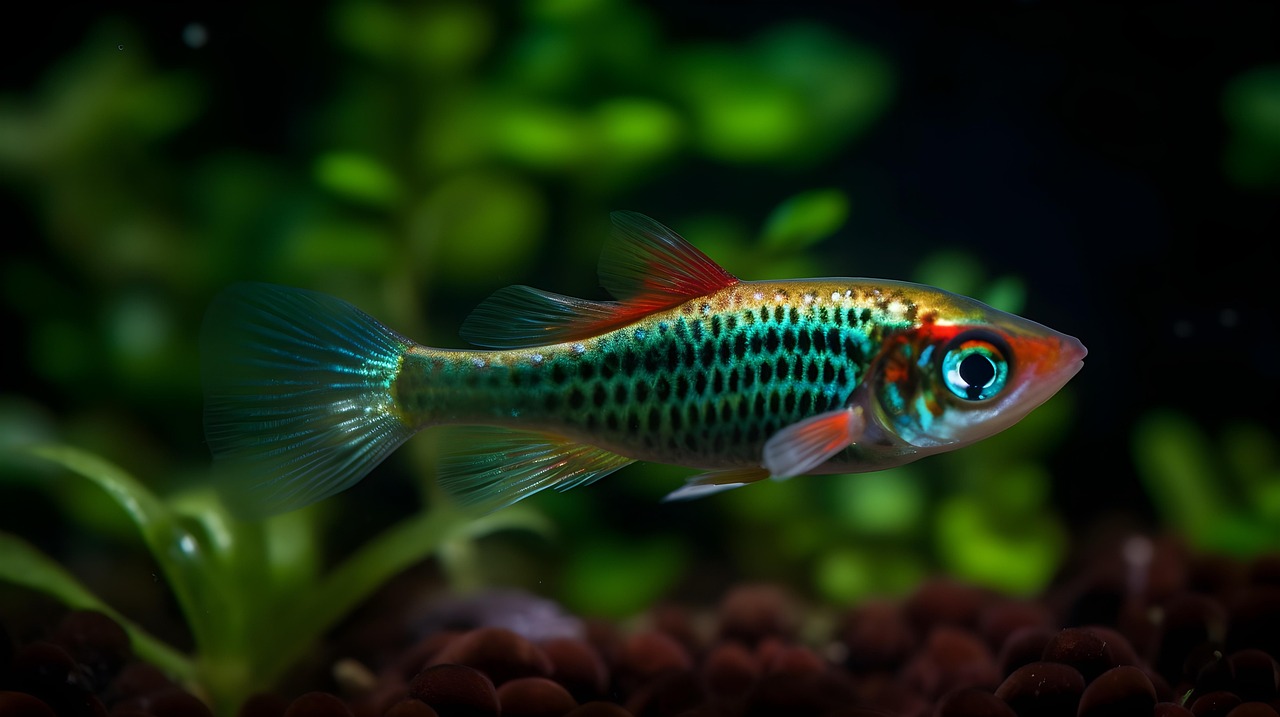
Wild males carry deeper red fin blotches, denser blue-black body base colour and more tightly packed pearl spots than most farm stock. Captive lines have been selected subtly toward brighter overall appearance under shop lights, but the individual spots tend to be larger and less discrete. Females show the contrast most clearly: wild females retain a subtle gold-olive body colour, while long-line captive females often appear bleached-grey even when healthy.
Size and Body Shape
Wild-caught adults typically reach 2.2 to 2.4 cm standard length, with compact bodies and minimal deformation. Captive lines average 1.8 to 2.2 cm and more frequently show minor spinal curvature, short gill plates or asymmetric fin development from high-density fry rearing. Inspect any captive specimen in profile before buying, and reject any with visible spinal kinks.
Hardiness in Singapore Tap Water
This is where captive stock often wins. Farms in Southeast Asia rear the fish in water closer to Singapore PUB parameters (soft, slightly acidic, warm) than the cold hill-stream origin of wild populations. Wild imports struggle for weeks in Singapore tanks above 25 degrees and frequently fail during the first post-arrival fortnight. Captive stock acclimates within days and tolerates 26 to 28 degrees without stress. The CPD aquascape guide covers the temperature considerations.
Behavioural Differences
Wild galaxy rasboras retain strong hiding instincts, spending most of their first three months in a new tank tucked into plant thickets and only emerging for food. Captive stock is bolder almost from day one, displaying and sparring in the open within a week of introduction. If you want visible fish during the daytime, captive stock delivers; if you want natural behaviour suited to observation-heavy biotope tanks, wild stock rewards patience.
Breeding Colouration Triggers
Males of both origins darken and flare when competing for females, but wild males hold the colour for longer during courtship and develop more saturated fin reds than captive counterparts. Group ratios of two females to each male replicate stream conditions and reduce harassment in both lines. The CPD breeding guide covers the egg-scattering behaviour and fry rearing.
Import Source Realities in Singapore
Y618, C328 Clementi, Nature Aquarium (Sin Ming) and several Serangoon North shops rotate between Vietnamese and Indonesian farm stock. Wild-caught imports from Myanmar reach SG irregularly through specialist importers such as Seaview and Green Chapter; expect to pay $5 to $8 per fish for wild stock versus $3 to $4 for captive. Ask the shop directly and look at fin intensity and body condition to verify.
Tank Setup Preferences by Origin
Wild specimens thrive in cooler (23 to 25 degrees), densely planted setups with Limnophila or Rotala thickets and minimal lighting. Captive stock tolerates the brighter, warmer tanks most Singapore aquascapes default to, including Dutch-style planted layouts at 27 degrees. Neither origin does well in sparsely planted tanks with open swimming space; both need cover to display natural behaviour. Our galaxy vs chili rasbora article covers size-appropriate tankmates.
Disease Susceptibility
Wild imports frequently carry external parasites, gill flukes and internal worms, and a 30 day quarantine with praziquantel and levamisole is essentially mandatory. Captive stock from reputable farms arrives cleaner, though internal bacterial infections from high-density shipping remain a risk. Always quarantine either origin for at least two weeks before adding to a display; our hospital tank setup guide covers the basic quarantine protocol.
The Ethical Angle
Wild collection of galaxy rasbora drove the original population to near-extinction within two years of discovery. Modern Myanmar exports are reported to be lower volume and from more stable populations, but field data is thin. For most hobbyists, captive stock is the responsible choice both for population conservation and for fish welfare during import. Pay the premium for wild stock only if you are set up to keep them properly and appreciate the original phenotype.
Which to Buy
For most Singapore hobbyists, captive-bred galaxy rasbora in a soft, warm nano tank is the right pick. Wild stock belongs in dedicated biotope tanks with chillers, careful quarantine and experienced husbandry. Neither option excuses impulse-buying fish you have not prepared for; the species is small, stunning and fragile regardless of origin.
Related Reading



