
Green Neon vs Neon Tetra Taxonomy: Paracheirodon Species
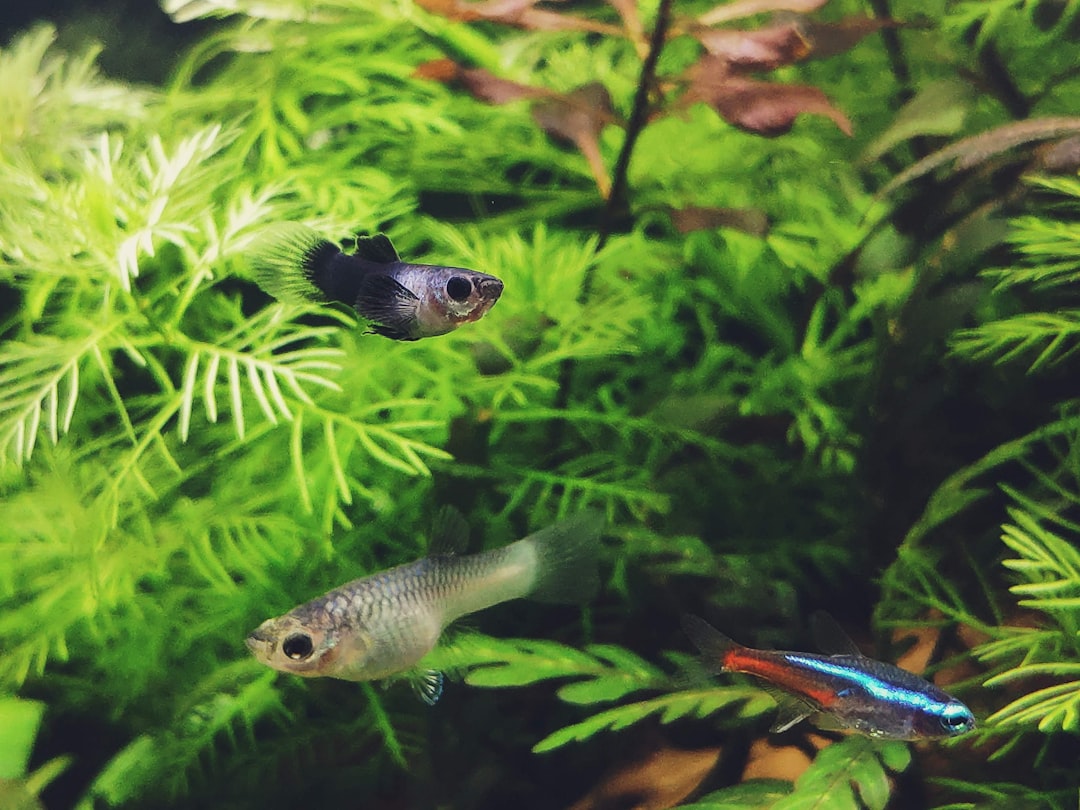
Three fish share a genus and a marketing name, and almost every Singapore shop lumps two of them under the same tank label, which is how hobbyists end up with green neons in water better suited to neons and wondering why the fish fade in a month. A clear green neon vs neon tetra taxonomy breakdown starts with remembering that Paracheirodon contains three described species with distinctly different wild ecologies. This guide from Gensou Aquascaping at 5 Everton Park walks through the visual, distributional and water chemistry differences that separate P. simulans, P. innesi and the cardinal tetra P. axelrodi.
The Three Species in Genus Paracheirodon
Neon tetra (Paracheirodon innesi) was described in 1936 from the upper Amazon basin. Cardinal tetra (P. axelrodi) followed in 1956 from the Rio Negro and upper Orinoco. Green neon (P. simulans) was described in 1963 from smaller blackwater tributaries of the Rio Negro and upper Orinoco. All three share a neon blue lateral stripe but differ in red coverage, body size and water chemistry tolerance. Our cardinal vs neon comparison covers the other common mix-up.
Visual Identification Cheat Sheet
Neon tetra carries a red belly from mid-body to caudal peduncle, reaches 3.5 cm and shows a broader, more silvery flank. Green neon reaches only 2 to 2.5 cm, carries almost no red, and shows a predominantly blue-green body with a thin red smudge near the caudal fin. Cardinal tetra extends the red from snout to tail along the entire lower half, reaches 4 to 5 cm and shows a more robust body. If the red reaches the eye, it is cardinal; if there is almost no red, it is green neon.
Why Water Chemistry Matters
This is where the taxonomy becomes practical. Green neons come from very soft, acidic blackwater (pH 4 to 5.5, GH under 2, TDS under 30) and handle Singapore tap water poorly. Neon tetras tolerate pH 5.5 to 7.5 and GH up to 8 comfortably, making them suitable for most SG community tanks. Cardinals prefer warmer, softer water than neons but adapt better than green neons. The water hardness guide covers testing for GH.
Temperature Preferences
Neon tetras prefer 22 to 26 degrees and suffer at sustained Singapore ambient 28 to 30 degrees, which is why many community tanks see chronic disease. Green neons handle 26 to 29 degrees better because their natural habitat runs warmer shallow blackwater. Cardinals sit in between, ideally at 25 to 28 degrees. If you run an unchilled HDB tank, green neons are a better species choice than neons despite the marketing overlap.
Schooling Behaviour Differences
All three species shoal loosely rather than forming tight polarised groups, but green neons stay closer to cover and show more timid midwater behaviour than neons. Cardinals are boldest of the three and occupy the central column openly. If your tank has limited plant cover, cardinals display best; if it is a densely planted nano with blackwater tannins, green neons come into their own.
Colour Intensity and Lighting
Green neons respond most dramatically to blackwater conditions with tannin-stained water, where the blue lateral line appears almost electric. In clear water with bright lighting the fish looks washed out and unimpressive. Neon tetras hold colour better across varied lighting because their colour display is less context-dependent. The blackwater setup guide covers tannin sources suitable for green neon tanks.
Neon Tetra Disease Susceptibility
All three species can contract Pleistophora hyphessobryconis, the sporozoan that causes neon tetra disease, but neons are by far the most commonly affected in Singapore shops due to the volume and speed of farm turnover. Cardinals and green neons contract it less often, though the difference is due to farming practices rather than species resistance. Our neon tetra disease treatment guide covers recognition and response.
Singapore Shop Availability
Neon tetras are the most common and cheapest, running $1 to $1.50 per fish at virtually every shop. Cardinals sit around $2 to $3, widely stocked at C328 Clementi, Y618 and Thomson Road shops. Green neons are harder to find and usually appear at specialist planted tank shops like Green Chapter or Polyart; expect $2 to $3.50 per fish, often imported from South America rather than farm-bred.
Choosing for a Nano Tank
For a 30 to 60 litre blackwater nano at ambient Singapore temperatures, green neons are the logical choice. Their small size and warmth tolerance suit the tank profile. For a cooler, larger community tank with consistent chilling, cardinals or neons both work, with cardinals displaying more prominently. Our neon tetra care guide covers the common species in more detail.
Breeding Difficulty
Green neons are the hardest of the three to breed, requiring very soft water (TDS under 20), pH below 5.5 and near-darkness for successful spawns. Cardinals are slightly easier, neons moderately so. All three produce tiny fry that require infusoria or vinegar eels before graduating to baby brine shrimp. Commercial production of green neons remains largely wild-caught or lightly farmed because of the narrow breeding window.
The Practical Takeaway
Ask the shop which species you are actually buying and look at the fish rather than the label. If the red covers most of the body, you are getting a cardinal. If the body shows almost no red and the fish measures under 2.5 cm, it is a green neon. Everything in between is usually a standard neon tetra. Matching water chemistry to the actual species solves most of the longevity problems Singapore keepers see with this group.
Related Reading



