
Glass Catfish Care Guide: The Transparent Schooling Fish
Introduction
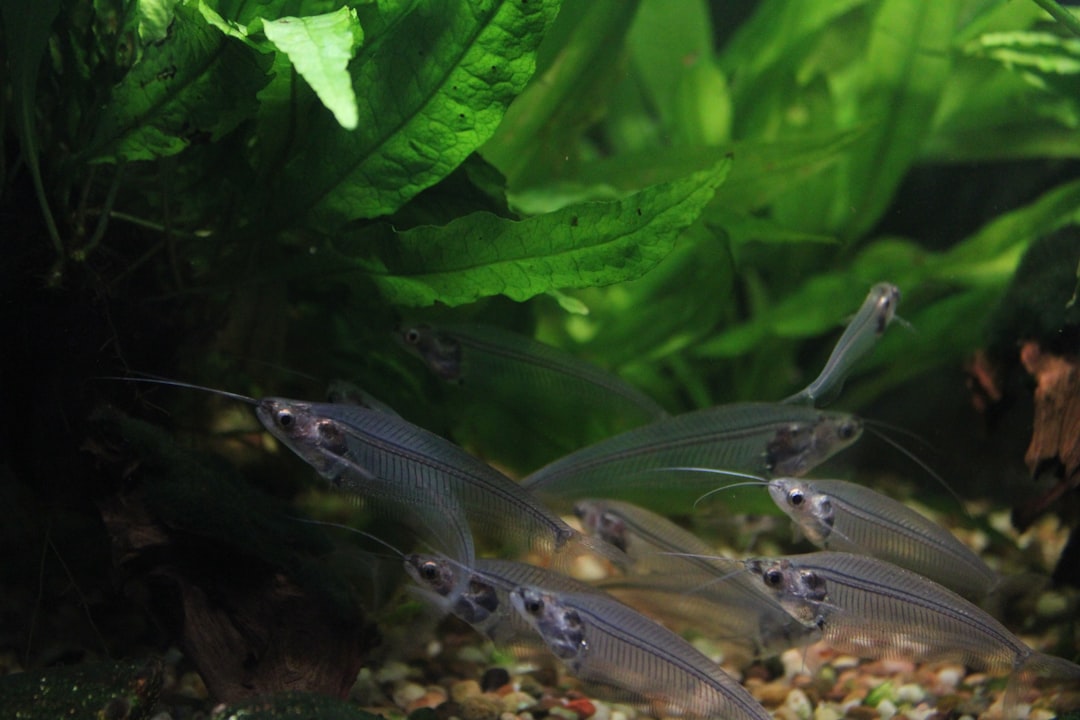
The glass catfish (Kryptopterus vitreolus) is one of the most visually extraordinary freshwater fish available to hobbyists. Its body is almost entirely transparent — you can see the spine, ribs and internal organs clearly through the skin. Native to rivers and streams in Thailand, this peaceful schooling fish has captivated aquarists for decades.
Despite their delicate appearance, glass catfish care is manageable for intermediate hobbyists willing to meet a few non-negotiable requirements: pristine water quality, a proper school of six or more, and a calm community environment. They are not the hardiest beginner fish, but in a well-maintained planted tank they can thrive for years. Singapore’s warm climate and slightly alkaline tap water work well enough with minor adjustments.
Appearance and Anatomy
Glass catfish grow to approximately 8 to 10 centimetres in length. Their most striking feature is, of course, their transparency. The body is almost entirely see-through, with a faint iridescent shimmer visible under certain lighting angles. The backbone, swim bladder and abdominal organs are plainly visible, giving the fish an almost ghostly quality.
Like other catfish, they possess a pair of long barbels extending from the upper jaw, which they use to detect food and navigate their surroundings. Unlike most catfish, however, glass catfish are mid-water swimmers rather than bottom dwellers. They tend to hover in gentle currents, often facing into the flow, with their bodies slightly angled upward.
A healthy glass catfish is clear and nearly invisible against a planted background. An unhealthy or stressed individual turns milky white or opaque — a critical visual indicator that something is wrong.
Tank Requirements
A school of six to eight glass catfish requires a minimum tank size of 100 litres, though 150 litres or more is preferable to provide adequate swimming room and stable water conditions. These fish are sensitive to parameter swings, and larger volumes buffer changes more effectively.
Set up the tank with:
- Moderate planting — Java fern, Cryptocoryne, Anubias and other low-to-moderate light plants provide cover and security. Glass catfish will hide among foliage when startled.
- Gentle to moderate flow — they naturally inhabit slow-moving rivers and enjoy positioning themselves in a mild current. Avoid powerful pumps that create turbulent conditions.
- Subdued lighting — bright overhead lights can stress glass catfish. Floating plants like Amazon frogbit or red root floaters help diffuse light naturally.
- Sandy or fine gravel substrate — while they are not bottom dwellers, a soft substrate benefits any bottom-feeding tank mates and supports a planted layout.
If you are planning a peaceful planted community suitable for glass catfish, our aquascaping services can help you design a tank with the right flow, planting density and lighting balance.
Water Parameters
| Parameter | Ideal Range | Notes |
|---|---|---|
| Temperature | 24–28 °C | Singapore ambient is at the upper end; a fan may be needed if room exceeds 30 °C consistently |
| pH | 6.5–7.5 | PUB tap water (pH 7–8) is acceptable; driftwood or Indian almond leaves can lower pH gently |
| GH | 3–8 dGH | Soft to moderately hard water preferred |
| KH | 2–6 dKH | Some buffering capacity helps prevent pH crashes |
| Ammonia / Nitrite | 0 ppm | Glass catfish are particularly sensitive to any detectable ammonia or nitrite |
| Nitrate | < 15 ppm | Keep low with regular water changes; more sensitive than many community fish |
Water quality is the single most important factor in glass catfish care. These fish react quickly to deteriorating conditions — often becoming opaque or listless before hardier species show any symptoms. Use a reliable test kit and perform 20–25 % water changes weekly. Always treat Singapore tap water with a conditioner that neutralises chloramine, not just chlorine.
Schooling Behaviour
Glass catfish are obligate schooling fish. This is not a suggestion — it is a hard requirement. Solitary glass catfish or pairs typically hide constantly, refuse food, become stressed and often die within weeks. A minimum group of six is essential, with eight to ten producing more natural behaviour.
In a proper school, glass catfish hover together in mid-water, gently swaying in the current. They feed more confidently, explore the tank and display their beautiful transparency. The school tends to occupy a favourite spot — often near a gentle flow outlet or among tall plant stems — and returns to it repeatedly.
Their mid-water schooling habit is unusual for catfish, which are typically bottom dwellers. This makes them an excellent addition to the middle zone of a community tank, filling a niche that many peaceful fish leave empty.
Feeding
Glass catfish can be fussy eaters, particularly when newly introduced. They strongly prefer live and frozen foods over dry preparations:
- Preferred foods — frozen bloodworms, frozen or live brine shrimp, daphnia and micro worms.
- Accepted with training — high-quality micro pellets and crushed flakes, particularly those that sink slowly through the water column.
- Feeding position — they feed in mid-water, so sinking pellets that pass through their zone work better than floating flakes.
Feed small amounts once or twice daily. New arrivals may take a week or more to begin eating in the aquarium. Offering live or frozen foods during this acclimation period greatly improves success rates. Once settled, most glass catfish can be weaned onto high-quality dry foods as a supplement.
You can see their last meal through their transparent bodies — a fascinating and practical way to confirm they are actually eating.
Compatible Tank Mates
Glass catfish are strictly peaceful and must be housed with equally calm species. Good companions include:
- Harlequin rasboras and other small rasboras
- Neon and cardinal tetras
- Corydoras catfish
- Otocinclus
- Kuhli loaches
- Small peaceful gouramis (honey gourami)
- Amano shrimp and Neocaridina shrimp
Avoid: any aggressive or boisterous species — tiger barbs, large cichlids, aggressive gouramis and fast-moving fish that create commotion at feeding time. Glass catfish will simply stop eating and hide if they feel threatened.
For advice on building a peaceful community around glass catfish, visit our shop at 5 Everton Park. We can recommend compatible species from our current stock.
Health and Stress Signs
Glass catfish provide a uniquely visible health indicator: their transparency. A healthy fish is almost completely clear. Watch for these warning signs:
Turning Opaque or Milky
This is the most common stress signal. The body loses its transparency and takes on a whitish, cloudy appearance. Causes include poor water quality, disease, temperature shock or loneliness (too few in the school). Test water parameters immediately and check the group size.
Hiding Constantly
While glass catfish are somewhat shy, a settled school should hover openly in mid-water during feeding times at minimum. If the entire group hides permanently, check for aggressive tank mates, excessive light or water quality issues.
Ich (White Spot Disease)
Glass catfish are susceptible to ich, and their transparent bodies make the white spots easy to detect early. Treat promptly with a half-strength dose of medication — these fish are sensitive to many common treatments. Raising temperature to 28–30 °C gradually can help accelerate the parasite lifecycle.
Bacterial Infections
Reddening of internal organs (visible through the body) or cloudy patches can indicate bacterial infection. Quarantine affected fish and treat with a broad-spectrum antibacterial medication at reduced dosage.
Frequently Asked Questions
Why do my glass catfish keep dying?
The two most common causes are insufficient group size and poor water quality. Glass catfish must be kept in groups of six or more — solitary individuals or pairs become chronically stressed and typically die within weeks. Additionally, they are more sensitive to ammonia, nitrite and nitrate than many community fish. Ensure your tank is fully cycled and maintain a strict water change schedule.
Can glass catfish live in a Singapore HDB flat without a chiller?
Yes, in most cases. They tolerate temperatures up to 28 °C comfortably, which aligns with air-conditioned room temperatures in Singapore. If your tank is in a non-air-conditioned room and regularly exceeds 30 °C, a clip-on fan to increase evaporative cooling may be needed. Avoid placing the tank near windows with direct afternoon sun.
Will glass catfish eat shrimp?
Adult glass catfish may eat very small shrimplets but generally coexist peacefully with adult Amano shrimp and Neocaridina shrimp. If you are breeding shrimp, the fry are at some risk, but glass catfish are not active hunters and pose far less threat than most other fish of similar size.
Do glass catfish need a heater?
In Singapore, a heater is usually unnecessary unless the tank is in a heavily air-conditioned room that drops below 24 °C at night. A stable temperature is more important than hitting a specific number. If your room temperature fluctuates significantly between day and night, a heater set to 26 °C can help prevent stress-inducing swings.
Glass catfish are among the most visually unique freshwater fish available — a living window into fish anatomy that never fails to intrigue visitors. With clean water, a proper school and peaceful tank mates, they reward patient aquarists with years of fascinating behaviour. If you are ready to add these transparent beauties to your community, contact Gensou or visit us at 5 Everton Park for healthy, well-acclimated stock and personalised advice.
Related Reading
- African Glass Catfish Care Guide: Transparent and Social
- How to Breed Glass Catfish: Transparent Fry and Spawning Triggers
- Glass Catfish Tank Mates: Peaceful Companions for Transparent Fish
- Agamyxis Catfish Care Guide: The Spotted Talking Catfish
- Asian Bumblebee Catfish Care Guide: Striped Nocturnal Hunter



