
Halfmoon Angelfish Care Guide: Long Fin Variety
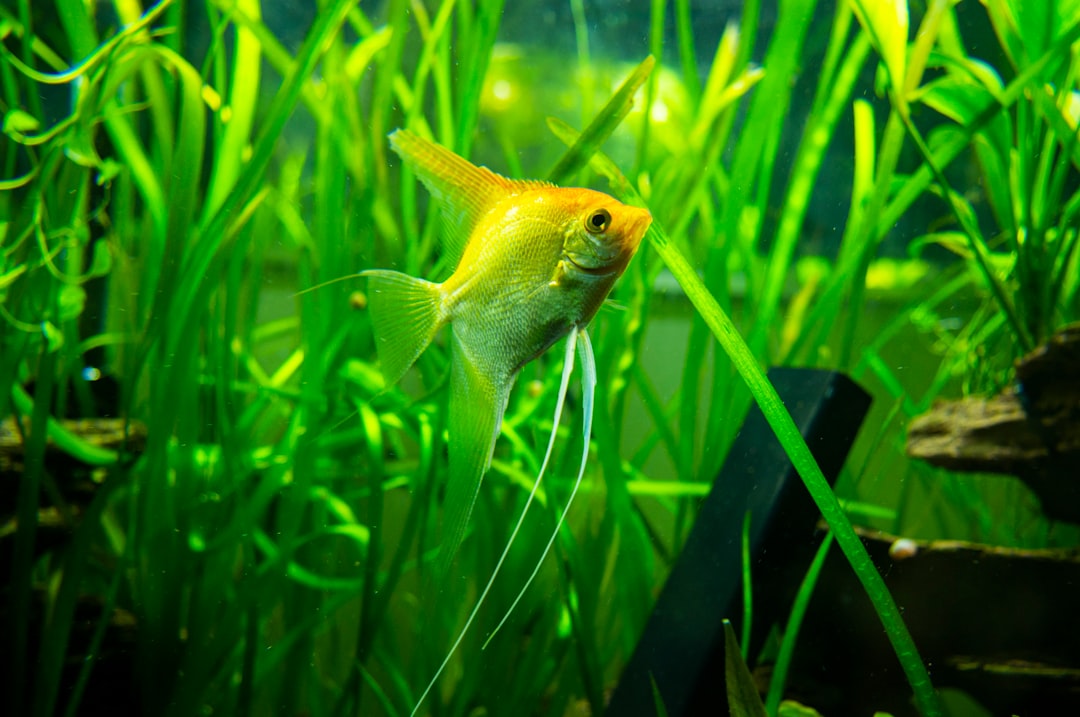
Halfmoon angelfish get their name from the dramatic caudal and dorsal extensions that fan out into a near-semicircle when the fish flares. This halfmoon angelfish care guide from Gensou Aquascaping at 5 Everton Park, Singapore addresses the specific husbandry that long-finned Pterophyllum scalare strains demand — especially fin protection, flow management, and tank mate selection. The underlying species is identical to the standard scalare; what differs is a recessive fin-extension gene that makes every fin roughly twice the expected length.
Quick Facts
- Scientific name: Pterophyllum scalare (halfmoon long-fin form)
- Genetics: recessive sf (super veil) allele, homozygous expression
- Adult size: 13-15 cm body, 30-35 cm fin-to-fin including trailing extensions
- Minimum tank: 250 litres, 55 cm tall to accommodate fin spread
- Water: pH 6.5-7.5, GH 3-10, 26-29 degC
- Flow: low to moderate — strong current damages fins
- Lifespan: 7-9 years (slightly shorter than standard scalare)
Halfmoon vs Veil vs Super Veil
Terminology is inconsistent across the hobby. Halfmoon typically describes a fish with a near-180-degree dorsal-to-anal fin spread when flared. Veil describes trailing filaments; super veil (double sf) creates the longest fins. Halfmoon often stacks with veil genes — many fish sold as halfmoon carry both. The visual result is a dramatic, flowing silhouette that shows best when the tank gives the fish room to display.
Tank Size for Long Fins
Length is less critical than height and width — fin extensions need vertical clearance and open swimming room. A 120 x 45 x 55 cm tank (roughly 300 litres) houses a pair with space to spare. Avoid narrow tanks under 45 cm front to back; the fish cannot turn without brushing glass, which wears down the trailing edges.
Flow and Filtration
Strong flow shreds long fins over weeks. Use a canister filter with spraybar output directed at the back glass, creating a gentle return rather than a direct jet. Total flow rate of 4-6x tank volume per hour is plenty. Surface skimmers are fine; powerheads are not needed and usually harmful.
Water Parameters
Standard scalare parameters apply. pH 6.8-7.4, GH 3-8, temperature 26-28 degC. Clean water is especially important — fin rot attacks damaged edges rapidly, and long fins are more prone to bacterial infection than short fins. Weekly water changes of 25 percent and nitrate under 15 ppm are the target.
Diet and Fin Condition
Nutrition matters for fin repair. High-protein foods with added vitamins and Omega-3 — NLS Thera-A, Hikari Vibra Bites, and frozen mysis — support tissue regeneration. Feed twice daily, small portions. Add garlic-soaked foods weekly; the allicin content boosts immune response and helps damaged fins recover.
Tank Mates — Critical for Long Fins
Fin-nippers are the single biggest threat. Absolutely avoid tiger barbs, serpae tetras, and any kind of barb. Safe companions include rummynose tetras, lemon tetras, harlequin rasboras, Corydoras sterbai, bristlenose plecos, and peaceful dwarf cichlids. Housing two halfmoons of similar size works best; a mismatched size pair ends with the smaller fish’s fins shredded.
Common Issues
Fin rot from bacterial infection is the frequent problem in Singapore’s humid tropical ambient. At the first sign of ragged edges, raise temperature to 28 degC, do a 30 percent water change, and treat with a furan-based medication if rot spreads. Prevention — stable parameters and calm tank mates — beats treatment every time. Long-fin angels also show slight tail curling in stunted stock; buy from breeders who cull aggressively.
Related Reading



