Underwater Housing Photography Guide: Cameras and Lenses
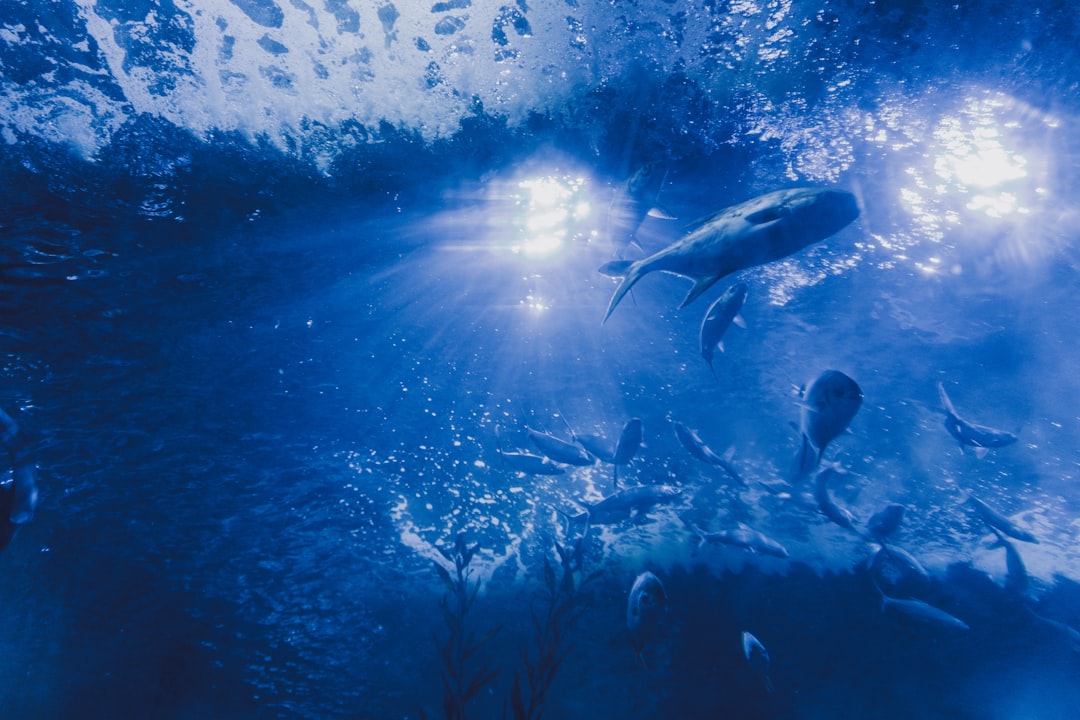
Photographing fish and coral through curved glass and agitated water rarely delivers the result you saw at the tank. An underwater housing photography guide written for aquarium keepers rather than divers fills a real gap — the requirements are different, the working distance is shorter, and flash behaviour is tricky inside a rimless cube than on a coral reef in Bali. This guide from Gensou Aquascaping at 5 Everton Park distills a decade of shooting competition aquascapes and client installs using dedicated housings, magnet mounts and dry-lens workarounds. The aim is to help you pick a realistic setup rather than chase catalogue specs you will never use.
Why Bother With a Housing at All
Shooting through front glass captures reflections, distortion and colour cast no amount of post-processing fully removes. An underwater housing — even a modest one — places the lens inside the water column, eliminating the glass-water interface and letting you shoot plants, fish and coral close-up with a clarity that phone photography cannot touch. For aquascape portfolios, competition entries and serious product work, the difference is obvious.
For casual Instagram posts, the phone-through-glass approach described in our phone camera tips is honest and sufficient. Housings belong to serious portfolio work.
Camera Body Choice
Three practical tiers exist in 2026. The Olympus/OM System TG-7 is a dedicated waterproof compact at roughly $700, no housing needed, rated to 15 m and perfectly adequate for tank interiors. Mirrorless bodies like the Sony A6700 or Canon R50 in an entry-level polycarbonate housing (Ikelite, SeaFrogs) add up to $2500-3500 and deliver substantially better image quality. Full-frame rigs (Sony A7 IV, Canon R6 II) in aluminium housings from Nauticam or Isotta land north of $7000 and are overkill unless you do this for income.
For most aquarium hobbyists, a mid-tier APS-C mirrorless with a basic housing is the sweet spot. The sensor handles low-light tank interiors, and the weight stays manageable when you are hovering a camera in a 60 cm cube.
Lens and Port Choice
Wide-angle looks dramatic but distorts fish. For aquascapes, a 30-40 mm equivalent prime with a flat port delivers the most honest render. For fish portraits, a 60-100 mm macro with a flat port brings sharp eyes and no barrel distortion. Avoid dome ports for aquarium work — they are designed for wide rectilinear underwater scenes in open water and wash out close-up tank shots.
Flat ports are also cheaper and more forgiving of fingerprints during handling in a cabinet-constrained space.
Lighting Inside the Tank
The tank’s own LED fixture is rarely ideal for photography. Dimmed display lighting is flat; full-power lighting blows highlights on pale sand. Two practical approaches: use a video light (a small 60 W LED panel with CRI above 95) handheld above the tank, or mount two small strobes on magnet arms inside the water. The video-light approach is simpler and produces consistent continuous output for both stills and video.
For aquascape shots, turn off return pumps and wavemakers for 30 seconds before shooting — still water renders plants crisp and prevents motion blur on any exposure longer than 1/80 s.
White Balance and Colour Casts
Shoot RAW, always. Aquarium LEDs vary from 6500 K to well over 20000 K (reef tanks), and auto white balance guesses wildly. Set a custom white balance on a grey card dipped into the water, or correct in Lightroom using the eyedropper on a neutral substrate. Follow the approach detailed in our white balance guide for consistent results.
Focus Strategy
Eye-detect autofocus works on most fish species but fails on glass catfish and highly reflective scales. For fish portraits, single-point AF on the eye and burst mode covering 5-10 frames gives you one sharp keeper out of every sequence. For aquascapes, focus-stack 3-5 frames at f/8 from a tripod outside the tank, or use the housing’s focus ring through a flat port.
Housing Maintenance
Rinse the housing in fresh water after every freshwater session, and in plain water then soap after any marine session. O-rings are the weakest link — inspect, clean with a soft cloth and re-grease silicone monthly. Store the housing open-lidded; compressed O-rings deform and leak. Replace O-rings yearly regardless of appearance, at roughly $30-50 per set.
Never open a housing in humid conditions near a running tank. The Singapore climate at 30 °C and 80 % RH guarantees condensation on the inside port within minutes of sealing.
Working in Small Tanks
A 60 cm cube has less working distance than a 4-foot display. Pre-plan the shot: remove one wavemaker, trim the scape if it crowds the lens, and wipe the glass clean outside and inside where your housing will dip. Marine tanks need extra care — the housing should be rinsed before entering a freshwater tank on the same day to avoid transferring salt residue.
Editing Workflow
Aquarium images need different edits from terrestrial photography. Lift the shadows conservatively, pull highlights on the sand hard, and de-saturate green channels by 10-15 % to reverse the green cast that even corrected white balance leaves behind. Follow a consistent preset for series shots, not frame-by-frame editing — consistency matters more than perfection for portfolio pages and competition submissions.
Realistic Budget and Upgrade Path
Start with a TG-7 or equivalent for $700-800 and a cheap $200 magnet arm for video light. Shoot a portfolio over six months. If results feel limiting, step up to a mirrorless plus polycarbonate housing, reuse the lighting. Only move to aluminium housings and dedicated macro ports after two years of consistent output. The progression protects you from spending $10000 on gear you will not use enough to justify.
Related Reading