
Fancy Tiger Shrimp Care Guide: OEBT and Blue Tiger
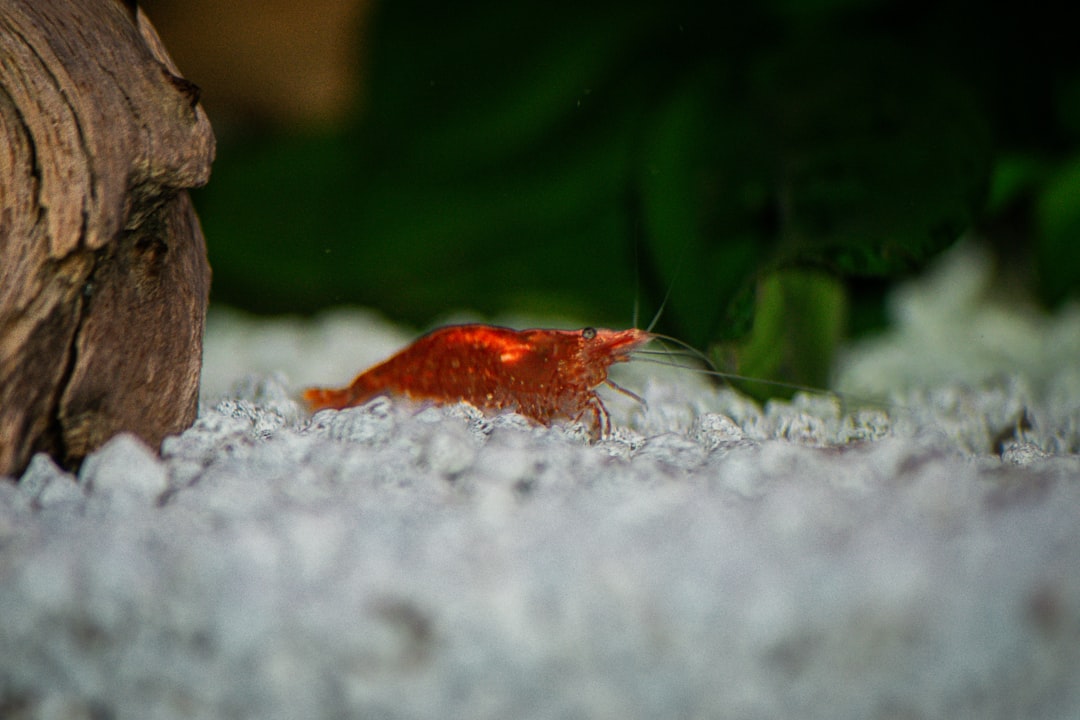
Fancy Tigers are the premium end of the Tiger shrimp family, selectively bred over decades from wild Caridina mariae populations to produce deep blue bodies, orange eyes, and clean black striping. The Orange Eye Blue Tiger (OEBT) is the best-known member of the group, but the Fancy Tiger designation covers a broader set of selected colour morphs including Black Tiger Orange Eye and Royal Blue Tiger. This fancy tiger shrimp care guide from Gensou Aquascaping at 5 Everton Park explains the lineage, the water parameters that differ meaningfully from Caridina bee shrimp, and why Singapore tap water is almost workable for this species with minimal modification.
Quick Facts
- Species: Caridina mariae, not the C. cantonensis complex of CRS/Pinto
- Sub-types: OEBT (Orange Eye Blue), BTOE (Black Tiger Orange Eye), Royal Blue
- Signature: deep blue or black body with orange eyes from recessive colour locus
- Water: TDS 180-250, pH 6.8-7.5, GH 6-8, KH 2-4, temp 22-25 C
- Substrate: inert gravel or sand works — active soil not required
- Price in Singapore: OEBT grade A $8-15, SS $25-45, Royal Blue SS $50-100
- Compatible with Neocaridina; will hybridise with other C. mariae variants
The Tiger Lineage Roots
All Fancy Tigers trace back to wild Caridina mariae, a species native to southern China that was historically imported as simply “Tiger shrimp” or “Yellow Cheek Tiger” in the early 2000s. Unlike Crystal Red and Pinto which come from C. cantonensis, Tiger shrimp are a different species entirely and have subtly different water chemistry needs — they come from slightly harder, more neutral water than their bee-shrimp cousins.
The Orange Eye trait is recessive. Breeding OEBT x OEBT produces consistent orange-eyed offspring; crossing OEBT with wild-type Tiger produces normal-eye F1 offspring that carry the gene, and F2 breedings show the classic 3:1 Mendelian split with 25 percent orange-eyed animals.
OEBT: The Orange Eye Blue Tiger
OEBT shrimp show a translucent to opaque blue body with black horizontal tiger stripes and distinctive orange eyes. Grade evaluation focuses on blue intensity, stripe clarity, and eye colour saturation. Grade A animals have moderate blue with visible striping; SS shrimp show deep solid blue with razor-clean black stripes; SSS OEBT have the near-opaque royal blue body that made the variety famous on the international shrimp scene around 2010-2013.
Blue colour intensity in OEBT responds to diet and substrate colour. Animals kept over dark substrate develop deeper blue within weeks compared to siblings kept over light sand. This is not genetic; it is a temporary adaptation driven by chromatophore response to background contrast.
Black Tiger Orange Eye and Royal Blue
BTOE (Black Tiger Orange Eye) is the darker phenotype: near-black body with orange eyes and faint striping. The black expression is a separate selection from the blue line and does not produce blue offspring when crossed. Royal Blue Tigers are a further refinement of the OEBT line, selected for maximum blue density and minimised stripe visibility — essentially a solid blue animal with orange eyes.
Both variants hybridise freely with each other and with standard OEBT. Mixed Fancy Tiger colonies produce varied offspring and over 3-4 generations tend to drift towards the dominant parental type.
Water Chemistry: Harder Than Bee Shrimp
This is the key difference from CRS and Pinto keeping. Fancy Tigers thrive in TDS 180-250 ppm, pH 6.8-7.5, GH 6-8, KH 2-4. Singapore PUB tap water at pH 7.2, GH 2-4, KH 1-3 is close to workable — a small addition of crushed coral in the filter or a partial GH+ remineraliser dose brings tap water into the Tiger sweet spot without needing full RO reverse osmosis setup.
This makes Fancy Tigers far easier to keep in Singapore than CRS, Pinto, or galaxy animals. A keeper with chlorine-dechlorinated tap water, a small amount of crushed coral, and a chiller set to 24 C has a workable Fancy Tiger setup with minimal ongoing water prep.
Substrate and Tank Setup
Unlike bee shrimp, Fancy Tigers do not require active soil. Inert gravel, sand, or aquarium-safe black quartz works fine, and because active soil is not needed, tanks can run for years without substrate replacement — a significant cost and labour saving. A dark substrate enhances blue colouration in OEBT and Royal Blue variants.
A 30-45 litre nano tank with a sponge filter, moderate lighting, and floating plants like Salvinia or duckweed makes an ideal colony setup. Add mosses (Christmas, Java, Weeping) and some cholla wood for biofilm grazing. Temperature 22-25 C; a chiller is recommended but Tigers tolerate up to 26 C better than bee shrimp do.
Feeding and Breeding
Fancy Tigers are less fussy eaters than CRS. A mixed diet of Bacter AE 2-3 times weekly, shrimp pellets (Shrimp King, Mosura, BorneoWild) once or twice weekly, and blanched vegetables every 10 days keeps colonies healthy. Fresh mulberry leaves enhance blue pigmentation in OEBT specifically — anecdotal but widely reported among breeders.
Breeding begins at 3-4 months of age. Clutch sizes are generous (25-40 eggs), incubation runs 25-30 days at 24 C, and juveniles are independent from birth. Expect a starting colony of 10-15 animals to produce visible population growth within 4-5 months.
Compatibility and Tank Mates
Fancy Tigers tolerate a broader tank community than bee shrimp because their water parameter range overlaps with many nano fish. Compatible with cherry shrimp, ember tetras, chili rasboras, Boraras species, and otocinclus. They will not interbreed with Neocaridina but will hybridise with any other Caridina mariae variant — do not mix OEBT with wild Tigers or BTOE if you want to preserve pattern lines.
Sourcing in Singapore
OEBT grade A runs $8-15 at most shrimp-focused shops in Singapore, with SS reaching $25-45 and true Royal Blue SS or SSS at $50-100 per animal. C328 Clementi and the Serangoon North shrimp specialists typically stock OEBT. For BTOE and Royal Blue, check with dedicated shrimp breeders through Facebook groups or Carousell — Malaysian breeders in JB supply most of the rarer Tiger variants to the local market. A well-chosen fancy tiger shrimp care guide colony is one of the easier entry points into premium Caridina keeping.
Related Reading
Blue Tiger Shrimp Care Guide
Caridina Shrimp Care Guide
Taiwan Bee Shrimp Care Guide
Crystal Red Shrimp Grading Guide
Caridina vs Neocaridina Shrimp Differences



