
Rummy Nose Tetra Care Guide: The Ultimate Schooling Fish
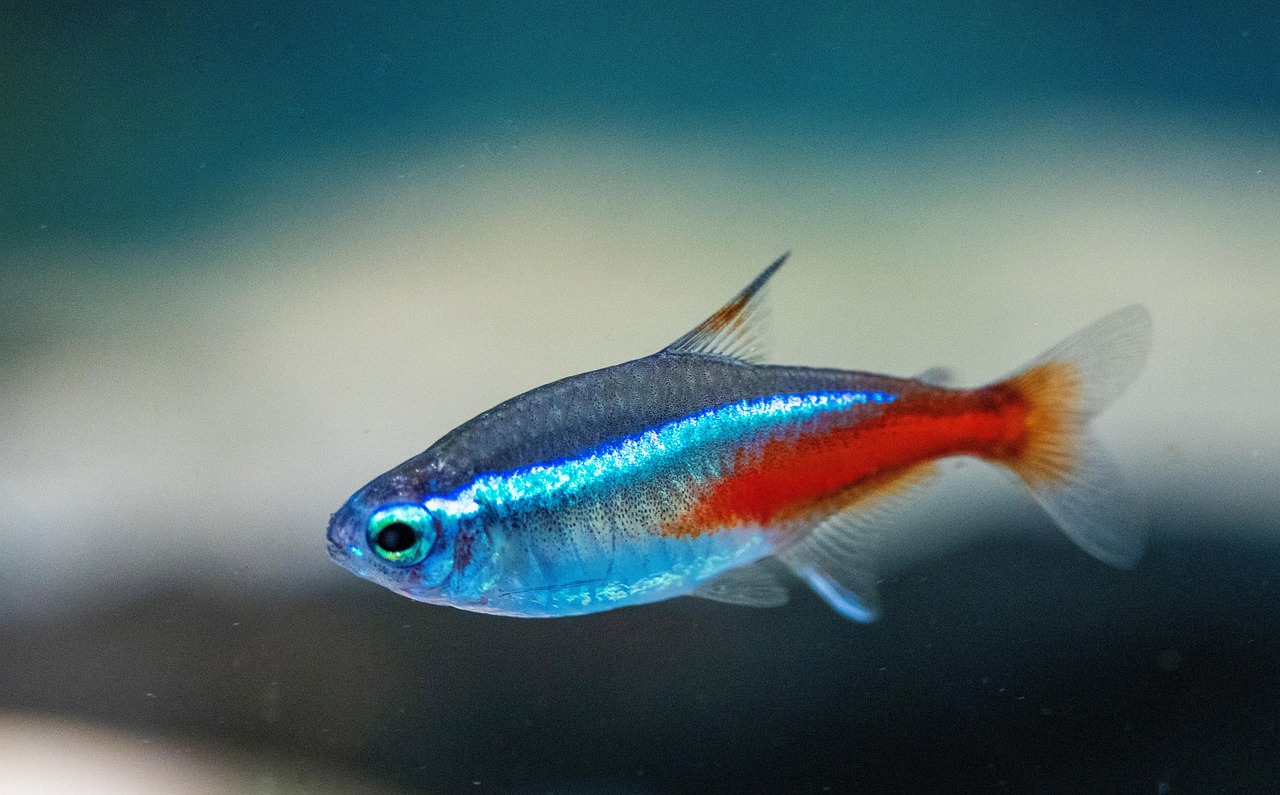
Ask any experienced aquascaper to name the best schooling fish for a planted tank, and the rummy nose tetra will be at or near the top of the list. Famous for their extraordinarily tight, synchronised schooling behaviour, rummy nose tetras move through an aquascape like a single organism — turning, accelerating and drifting in perfect unison. Add to this their distinctive bright red nose (which doubles as a live water quality indicator) and the boldly striped tail, and you have a fish that is as functional as it is beautiful. This rummy nose tetra care guide covers everything from species identification to Singapore-specific considerations. This guide sits inside our broader Tropical Fish Species Master Index reference.
Famous Tight Schooling
Rummy nose tetras are not merely shoaling fish — they are true schoolers. The distinction matters. While species like ember tetras and harlequin rasboras form loose groups that drift in a general direction, rummy nose tetras form tight, disciplined formations. When one turns, the entire school turns. When one accelerates, they all accelerate, almost instantaneously.
This behaviour is most pronounced in larger groups. A school of 6 will show some coordination. A school of 20 or more in a well-designed aquascape is genuinely mesmerising — it is the kind of display that stops people in their tracks at aquascaping exhibitions and competitions.
Why They School So Tightly
In the wild, rummy nose tetras inhabit open water in South American rivers where predation pressure is high. Their tight schooling is an evolved defence mechanism — a large, coordinated group confuses predators, making it difficult to single out an individual. In the aquarium, this instinct remains strong, particularly when the fish are kept in proper numbers.
Recommended Group Sizes
- Minimum: 10 (below this, schooling is loose and the effect is diminished)
- Good: 15 to 20
- Stunning: 25 or more in a 200+ litre tank
The Red Nose as Water Quality Indicator
One of the most useful features of the rummy nose tetra is that its red colouration serves as a real-time water quality barometer. When water conditions are optimal — zero ammonia and nitrite, low nitrates, stable pH and temperature — the red extends deep and vivid across the entire head, from the tip of the snout to behind the gill cover.
When conditions deteriorate, the red fades to a pale pink or disappears almost entirely. This happens in response to:
- Elevated ammonia or nitrite
- High nitrate levels
- pH swings
- Temperature stress
- General illness or stress
- Recent transport or acclimation (temporary)
Experienced aquarists use their rummy nose tetras as a first-alert system. If you notice faded noses across the school, test your water immediately — there is likely a parameter out of range. This living indicator is remarkably sensitive and often detects problems before your test kit results show alarming numbers.
Note that some colour fading overnight is normal — rummy nose tetras naturally pale when resting in darkness, regaining full colour within minutes of waking.
The Three Rummy Nose Species
There are actually three distinct species commonly sold as “rummy nose tetras,” all with similar care requirements but subtle differences in appearance.
| Species | Common Name | Red Extent | Tail Pattern | Availability |
|---|---|---|---|---|
| Hemigrammus rhodostomus | True rummy nose | Red on upper and lower jaw only | Black and white horizontal stripes | Less common |
| Hemigrammus bleheri | Brilliant rummy nose / Firehead tetra | Red extends well past the gill cover | Bold black and white stripes | Most common in trade |
| Petitella georgiae | False rummy nose | Red limited to the nose tip | Black tail stripes with pink-orange base | Occasional |
The species most frequently sold in Singapore’s local fish shops is Hemigrammus bleheri, the brilliant rummy nose or firehead tetra. This is arguably the most attractive of the three, with the most extensive red colouration covering the entire head. When buying, look for fish with intense, deep red extending past the eyes and towards the gill cover — this indicates healthy, well-kept stock.
All three species have identical care requirements and school together readily, though purists prefer to keep a single species for consistency.
Water Parameters
Rummy nose tetras prefer soft, acidic water and are somewhat more demanding about water quality than many other community fish.
| Parameter | Ideal Range | Notes |
|---|---|---|
| Temperature | 24 – 28 °C | Moderate warmth tolerance |
| pH | 5.5 – 7.0 | Acidic to neutral; best colour below 6.5 |
| GH | 2 – 8 dGH | Soft water preferred |
| KH | 1 – 5 dKH | Low buffering |
| Ammonia / Nitrite | 0 ppm | Their red nose fades at the slightest detectable level |
| Nitrate | Below 15 ppm | More sensitive than most tetras |
To get the deepest red noses, water quality must be impeccable. This makes rummy nose tetras a slightly more advanced choice — they are forgiving of beginner mistakes only in the sense that they will visually tell you something is wrong. The fix is consistent maintenance: regular water changes, careful feeding and stable parameters.
Tank Setup
Rummy nose tetras need room to school. A tight, coordinated group in motion requires open swimming lanes — a densely planted tank with no open space will fragment the school and negate one of the species’ main attractions.
Tank Size
- Minimum: 80 litres for a school of 10 to 12
- Ideal: 120 to 200 litres for a school of 15 to 25
- Large display: 300+ litres for 30 or more — this is where they truly shine
Layout Principles
- Open swimming space: The centre and foreground should have clear, unobstructed areas for the school to move through
- Background and side planting: Dense stem plants along the back and sides provide security and contrast
- Hardscape: Driftwood and rocks positioned to create visual interest without blocking swimming lanes
- Substrate: Dark aquasoil enhances the contrast of their white bodies and red heads
- Flow: Moderate, directional flow. Rummy nose tetras enjoy swimming into a gentle current — it encourages tighter schooling
The classic aquascaping approach for rummy nose tetras is the Takashi Amano-style nature aquarium: a carefully composed hardscape with strategic planting, open midground space, and a large school of rummy nose tetras as the sole fish species. This combination has won countless aquascaping competitions for good reason.
Feeding
Rummy nose tetras are straightforward to feed. They are mid-water omnivores that accept a wide range of foods.
Recommended Diet
- Staple: High-quality micro pellets or flakes with natural colour enhancers
- Protein (2-3 times weekly): Frozen brine shrimp, daphnia, bloodworms
- Live foods: Baby brine shrimp, daphnia — excellent for maintaining vibrant red colouration
- Variety: Rotating between different food types ensures complete nutrition
Feed small amounts twice daily. As with all community fish, avoid overfeeding — uneaten food degrades water quality, and rummy nose tetras will be the first to show you the consequences through faded colouration.
Tank Mates
Rummy nose tetras are peaceful community fish that pair well with similarly tempered species.
Excellent Companions
- Corydoras catfish — the classic bottom-dwelling complement to a rummy nose school
- Otocinclus catfish — algae control without interfering with the schooling display
- Cardinal tetras — can share the same soft, acidic water conditions
- Discus — in a larger, warm-water setup, rummy nose tetras are the traditional companion for discus
- Pencilfish — occupy the upper water layer and stay out of the way
- Amano shrimp — functional and peaceful
A Note on Single-Species Tanks
Many serious aquascapers keep rummy nose tetras as the sole fish species in their display tanks, pairing them only with invertebrates (shrimp, snails) and corydoras. This approach maximises the visual impact of the schooling behaviour and creates a clean, cohesive aesthetic. If you are designing an aquascape for competition or a high-impact display, consider this approach.
Planted Tank Suitability
Rummy nose tetras and planted aquariums are a match made in aquascaping heaven. The fish do not eat, uproot or damage plants. Their preference for soft, acidic water aligns perfectly with the conditions most aquatic plants prefer. And their coordinated schooling creates dynamic movement against the static beauty of the aquascape.
They are particularly effective in:
- Nature-style aquascapes: The definitive fish choice for this style
- Large planted community tanks: Their schooling creates a focal point of movement
- Discus planted tanks: The classic combination in warm, soft-water setups
If you are planning a high-end planted aquascape and want a fish that elevates the entire composition, rummy nose tetras are the professional’s choice. Gensou’s custom aquarium design service regularly features them in client aquascapes.
Temperature Considerations for Singapore
Rummy nose tetras have a temperature range of 24 to 28 °C, placing them in a moderate position for Singapore suitability. They are more heat-tolerant than neon tetras but not as warm-adapted as Endler guppies or sterbai corydoras.
Practical Approach in Singapore
- Air-conditioned room (24-26 °C): Ideal. Rummy nose tetras thrive in these conditions
- Cooling fans: Can bring tank temperatures from 30 °C down to 27-28 °C, which is within the acceptable range
- Non-air-conditioned room: Risky during the hot season (April to June) when ambient temps reach 32 °C. Sustained temperatures above 29 °C will stress them and cause colour loss
- Chiller: Recommended for the most consistent results, especially if the tank is not in an air-conditioned space
It is worth noting that rummy nose tetras are traditionally kept as companions for discus fish, which also prefer temperatures of 28 to 30 °C. There are reports from experienced aquarists of rummy nose tetras adapting to sustained temperatures of 28 to 29 °C, though this is at the upper limits of their comfort zone and may shorten their lifespan.
For professional advice on creating ideal conditions for rummy nose tetras in Singapore, Gensou’s maintenance team can assess your specific environment and recommend appropriate cooling solutions.
Frequently Asked Questions
Why are my rummy nose tetras not schooling tightly?
Loose schooling is usually caused by one of three things: too few fish (you need at least 10, ideally 15 or more), a tank that is too small or too cluttered for proper formation swimming, or the fish feeling very secure and relaxed. Interestingly, the tightest schooling occurs when there is some mild perceived threat — a larger centrepiece fish, moderate flow to swim against, or open space where they feel slightly exposed. A tank of rummy nose tetras that gently drift without tight formation may simply be very comfortable.
How can I make my rummy nose tetras’ noses redder?
The intensity of the red nose is primarily a function of water quality. To maximise redness: keep ammonia, nitrite and nitrate as close to zero as possible with regular water changes, maintain soft acidic water (pH below 7, GH below 8), ensure stable temperature, and feed a varied diet rich in natural colour enhancers like astaxanthin (found in brine shrimp and quality pellets). Stress from aggressive tank mates, overcrowding, or inconsistent maintenance will fade the red regardless of diet.
Are rummy nose tetras good for beginners?
Rummy nose tetras are an intermediate-level fish. While not particularly difficult to keep alive, they demand consistent water quality to display their best colouration, and their sensitivity to parameter fluctuations means they are less forgiving of irregular maintenance than hardier species. Beginners might consider starting with more resilient species like harlequin rasboras or ember tetras and graduating to rummy nose tetras as their maintenance skills develop.
Can I keep rummy nose tetras with discus?
Yes — this is one of the most classic combinations in the hobby. Both species prefer soft, acidic water and similar temperatures (28-30 °C for discus, 24-28 °C for rummy nose). In a discus tank, rummy nose tetras serve as both dither fish (encouraging shy discus to come out) and water quality indicators. The main requirement is a large tank (minimum 200 litres for this combination) with meticulous maintenance to satisfy both species’ demands for pristine water.
Ready to create a show-stopping aquascape with rummy nose tetras? Gensou designs and maintains custom aquariums that showcase these incredible schooling fish at their absolute best. From consultation to installation and ongoing care, we handle every detail. Contact us to start your project.
Related Reading
- False Rummy Nose Tetra Care Guide: Easier Alternative to the Real Thing
- Rummy Nose Rasbora Care Guide: Sawbwa resplendens Red Nose
- How to Aquascape for a Rummy Nose Tetra Shoal: Open Swimming Space
- Bentosi Tetra Care Guide: Ornate Fins and Subtle Elegance
- Black Neon Tetra Care Guide: Understated Elegance



