Aquascaping Styles Design Hub: All Techniques Explained
Underwater design is a discipline, not a decoration choice. Pick a style and every subsequent decision — rock, wood, plant list, fertiliser regime, fish — falls into place. This aquascaping styles design hub from Gensou Aquascaping in Singapore maps the major schools of planted-tank design, from Takashi Amano’s Nature Aquarium and the three-stone discipline of Iwagumi to the plant-street order of Dutch layouts, jungle overgrowth, and habitat-accurate biotopes. We will walk through hardscape materials, plant selection by layer, the CO2 and lighting that hold it together, competition craft, and give you a clear starting point for a 5-gallon nano or a 200-litre showpiece in a Singapore HDB living room. Every section links out to dedicated deep-dives so you can build expertise in any branch you choose.
Nature Aquarium Style (Amano)
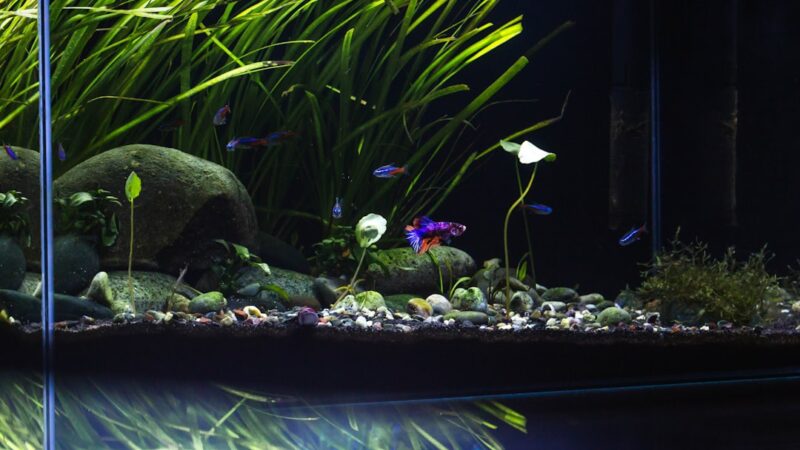
The Nature Aquarium movement, founded by Takashi Amano in the 1990s, remains the dominant aesthetic in modern planted tanks. Its philosophy draws on Japanese garden design — wabi-sabi, asymmetry, negative space — and translates forest, mountain or riverine scenes into glass boxes. Amano famously insisted that an aquascape should evoke a natural memory: a moss-covered riverbank from childhood, a drowned forest, the way light moves through water at dusk. Start with our Nature Style Aquascape Guide for first principles, then move to the practical Nature Aquarium Step by Step layout walkthrough.
Amano’s genius was marrying naturalism with hard discipline — the apparent chaos in a finished photograph is the result of months of precise trimming. Our Designing Like Takashi Amano breaks down his compositional rules, while Nature Aquascape Maintenance covers the long-term upkeep that matters more than the debut photo. For the philosophical split between strict habitat mimicry and the looser Nature Aquarium, read Biotope vs Nature Style Compared.
Iwagumi Minimalism
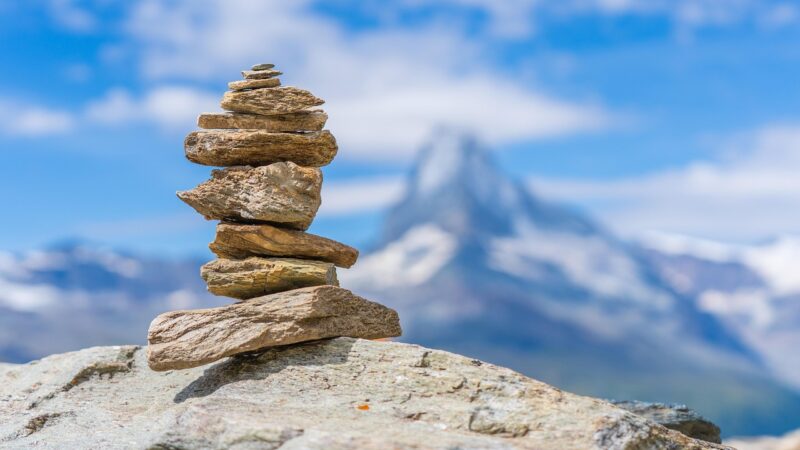
Iwagumi means “rock formation”. A pure Iwagumi uses an odd number of stones (three, five, seven), a single carpet species, and nothing else. Nothing hides a sloppy composition in this style — stone placement is everything, and the eye tracks every error. The largest stone, the Oyaishi, carries the scene; smaller Fukuseki, Soeishi and Suteishi support and balance it. Open the Iwagumi Aquascape Complete Guide: Japanese Minimalism for the canon, then study the placement tutorials in How to Create an Iwagumi Aquascape.
For the mathematical backbone, read The Golden Ratio in Aquascaping. Nano Iwagumi builders lean on Nano Iwagumi Stone Placement Rules: 3-Stone Golden Ratio. Iwagumi tanks run hot on algae in month one because the simple planting leaves few nutrient sinks — pair the setup with Iwagumi Algae Prevention First Three Months. A single-species carpet of dwarf hairgrass, Monte Carlo or hemianthus pulls the eye to the stones and keeps the composition reading clean. Source the right stone through our rock and stone range.
Dutch Street-Style Planting
Dutch aquascaping predates the Nature Aquarium by decades and remains the gold standard for plant-only displays. Christel Kasselmann and the NBAT (Dutch aquarium society) codified a system of plant “streets” — diagonal rows of contrasting species — that reward growers who can maintain twelve or more stem varieties simultaneously. No rocks, no wood, rarely any fish photography; the plants are the composition. Streets run diagonally across the tank, leaves of contrasting shape or colour sit beside each other, and the tallest species forms the Dutch “hill” at the rear corner. The core reference is Dutch Style Aquascape Complete Guide: Street Layouts. For technique, study Dutch Aquascaping Guide: Lush Plant Streets and Bold Colour and the walkthrough in Dutch Aquascape Step by Step.
The skill cap on Dutch tanks is trimming. Stems are topped on a rotating schedule so that the same row shows fresh growth every two weeks — rotate through the Dutch Aquascape Pruning Guide and plan multi-year upkeep with Dutch Aquascape Long Term Care. Cluster density — not species count — separates a beginner Dutch from a scoring one; a twelve-stem display with sloppy grouping looks worse than a six-stem build with disciplined clumping.
Jungle and Overgrown Styles
Jungle style rejects the tidy geometry of Iwagumi and the ordered rows of Dutch in favour of controlled chaos. Big plants, heavy shade, filtered light through tangled stems, and shadows that hide shy catfish. It is the most forgiving style for low-maintenance Singapore flats where you might travel a few weeks per year; a jungle tank gracefully survives what an Iwagumi will not. The canopy plants — Amazon sword, large crypts, tall vallisneria — eat nutrients faster than algae can, so the style self-buffers against neglect. Start at Jungle Aquascape Complete Guide: Overgrown Wild Look and the applied Jungle Style Aquascape Step by Step.
The Walstad method is jungle’s low-tech cousin — organic potting soil under a cap, no CO2, sometimes no filter. Diana Walstad’s research showed that a densely planted tank can self-regulate nutrients when plant mass matches fish load. Work through the Walstad Method Guide: Soil and Sunlight and the compact recipe in Walstad 10 Gallon No Filter Setup Guide. Driftwood-dominant jungle builds benefit from How to Aquascape With Driftwood Only. A true jungle has a visible foreground trail winding between stem clumps; a Walstad tank often does not — it is a contained wilderness rather than a composed view.
Biotope Aquariums
Biotope scaping is a parallel discipline. Instead of composing a landscape, you reconstruct a specific habitat — the exact rock, leaf litter, fish, and water chemistry of one stretch of one river. The craft rewards research as much as horticulture. A biotope judge asks not “is it beautiful?” but “is it accurate?” Are the fish found together in that stream? Is the substrate colour right? Would the pH actually sit between 4.2 and 5.0 after the Indian almond leaves steep? Orient yourself with the Biotope Aquarium Guide: Recreating Natural Habitats and How to Set Up a Biotope Aquarium for Beginners.
South America dominates serious biotope work because the Amazon basin holds roughly a third of all known freshwater fish species. The benchmark blackwater build is documented in Rio Negro Blackwater Biotope. African Rift Lake scapers will want Lake Tanganyika and West African Forest Stream. Southeast Asian hobbyists are spoilt for reference — the Mekong River and Borneo stream habitats land well in Singapore tap water without remineralisation. Pair any biotope with leaf litter — dried Indian almond leaves, oak leaves, or alder cones — to release tannins that match the source habitat and drop pH toward the 4.5-5.5 range typical of those waters.
Nano and Pico Aquascapes
Space — and floor loading in HDB flats — pushes most Singapore hobbyists toward tanks under 40 litres. The nano category is where creative design often peaks, because every centimetre counts and every species earns its place. A 20-litre cube holds the same design grammar as a 200-litre showcase; the only difference is tolerance for error. Begin with the generalist Nano Aquascape Guide: Planted Tanks Under 20 Litres and the Nano Aquarium Setup Guide.
Tank-size-specific recipes make planning easier. The common SG footprints are covered in 5-Gallon Aquascape Ideas, 10-Gallon Ideas and 20-Gallon Ideas. Cube tanks demand a symmetry-forward approach — How to Aquascape a Cube Tank. In a typical HDB living room, a 45-60 cm nano is the sweet spot — visible from the sofa, light enough that floor loading is not a concern, and small enough that weekly water changes take ten minutes. Bedroom installers should weigh filter noise carefully; a sponge filter under an air pump sits below 30 dB and lets the tank run overnight without disturbing sleep.
Hardscape Materials
Hardscape choice locks in the visual grammar of the tank. Stones set the lines, wood softens or complicates them, and substrate cues the horizon. Read the overview in Hardscape Layout Guide: Rocks, Wood and the Rule of Thirds, then pick materials. Blue-grey Seiryu is the classic Iwagumi stone — our Seiryu Stone in Aquascaping covers the basics and Seiryu Stone Replacement Alternatives details what to use now that Japanese export has tightened.
Other staples: Dragon Stone (Ohko), Lava Rock, and driftwood of every type covered in Best Driftwood for Aquascaping. Most hardscape choices affect chemistry; limestone raises KH, lava rock is inert, spider and Malaysian driftwood leach tannins that stain water amber for weeks. Test any new stone with vinegar before committing it to an Iwagumi: a drop that fizzes means calcium carbonate, which will drift KH and GH upward and undermine the plant selection chosen for soft-water species. Source stones and substrate through our aquarium soil range at Gensou.
Plant Selection by Layer
Three zones, each with its own species list. Carpet plants hold the foreground — our Aquarium Carpet Plant Comparison: 8 Species Ranked is the definitive shortlist, covering Monte Carlo, dwarf hairgrass, glossostigma and hemianthus against CO2 demand, light requirement and substrate depth. Mid-ground is bucephalandra, anubias and crypt country — see the Anubias Varieties Guide and Cryptocoryne Care Guide. These are rhizome species — bury the roots, not the rhizome, or the plant rots within weeks. Anubias is bulletproof for low-tech tanks and tolerates 22 to 30 degrees Celsius; bucephalandra rewards patient growers with iridescent leaves after months of slow attachment.
Background stems bring vertical colour and fast growth. Rotala and ludwigia cultivars carry most planted scapes; the Rotala Rotundifolia Guide is the starting point for red stems, and ludwigia repens handles the same role in lower-tech tanks. Mosses and epiphytes sit in their own layer — attach-and-forget species like Java Fern, plus mosses spanning java, Christmas, flame and weeping varieties. Plan the three-zone split with Foreground, Midground and Background in Aquascaping, and order from the live plants range.
Lighting, CO2 and Fertilisation
Plants grow on light, carbon and minerals — the three pillars of every style in this hub. Our Aquarium CO2 Guide is the entry point; most styles benefit from pressurised injection, but Low Tech Aquascape Guide: Beautiful Tanks Without CO2 shows the other path. For dosing philosophy, read the side-by-side PPS-Pro vs EI vs Lean Dosing Comparison, then pick your school via the EI Dosing Complete Guide. Dutch tanks live on EI; Nature Aquariums sit between EI and lean; Walstad jungles take no dosing at all because soil carries the nutrients and plant mass balances fish waste.
Singapore’s soft, slightly acidic PUB tap water suits most aquascape styles without heavy remineralisation, though GH boosters help carpet plants establish roots in the first month. Lighting hardware gets in-depth treatment in Best LED Lights for Planted Aquariums. For duration and photoperiod tuning, see Aquascape Lighting Spectrum Guide: Colour Temperature and PAR. Run 7-8 hours of peak lighting; longer photoperiods invite algae in 28-30 degree Celsius ambient tanks. Full pressurised CO2 sets, regulators and drop checkers are carried at our CO2 systems listing.
Competition and Inspiration
The International Aquatic Plants Layout Contest (IAPLC) judges nearly 2,000 entries from 70 countries each year. If you want to measure yourself, start with the IAPLC Competition Guide.
Studying top aquascapers accelerates taste more than any textbook. Read James Findley: Green Machine Approach, Oliver Knott: Rock-Heavy Compositions, George Farmer: Natural Planted Approach and the 2Hr Aquarist Dennis Wong Method. Each scaper has identifiable signatures — Findley favours expansive wood with delicate red stems; Knott builds dramatic rockwork with strong diagonals; Farmer teaches a naturalistic balance suited to intermediate growers; Wong writes the technical backbone of modern planted-tank chemistry and dosing.
Related Reading
This hub intersects with several neighbouring pillars. For complete beginners, pair it with the compositional primer in Aquascaping 101: Nature, Iwagumi and Dutch Styles Explained. Triangular, concave and island compositions are covered in the Triangular Composition in Aquascaping guide. The quick decision-tree for whether to run CO2 at all lives at Do I Need CO2 for a Planted Tank?. For fast-track competitive polish, read How to Score Higher in Aquascaping Competitions. Finally, to see how signature stylists diverge, revisit Famous Aquascapers and Their Signature Styles: Amano, Farmer and Beyond. Tools for every style in this hub are stocked under our aquascaping tools range.